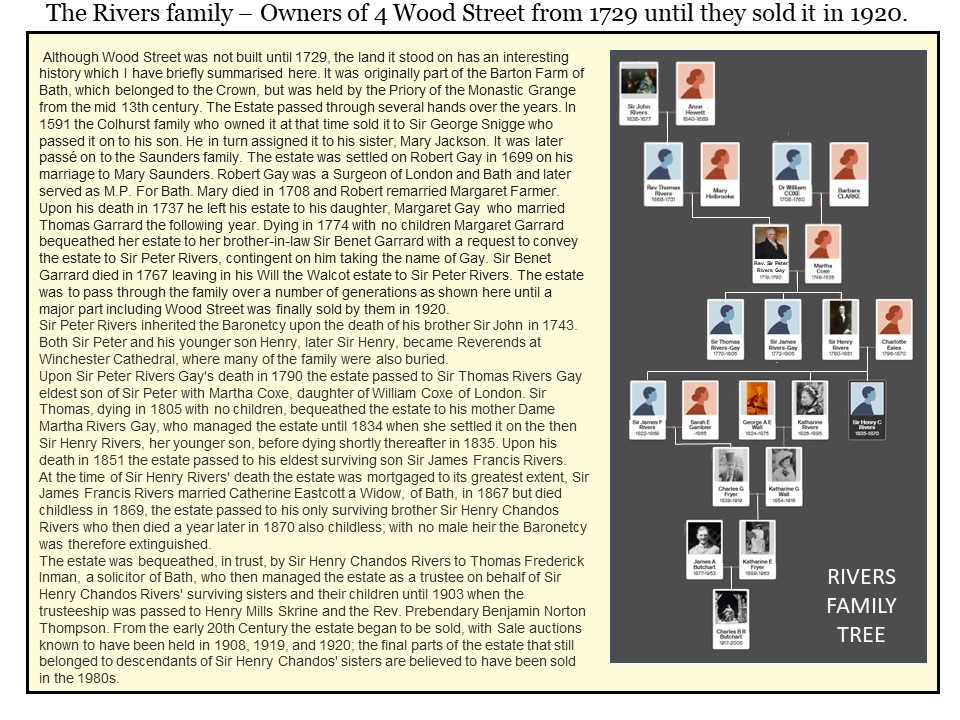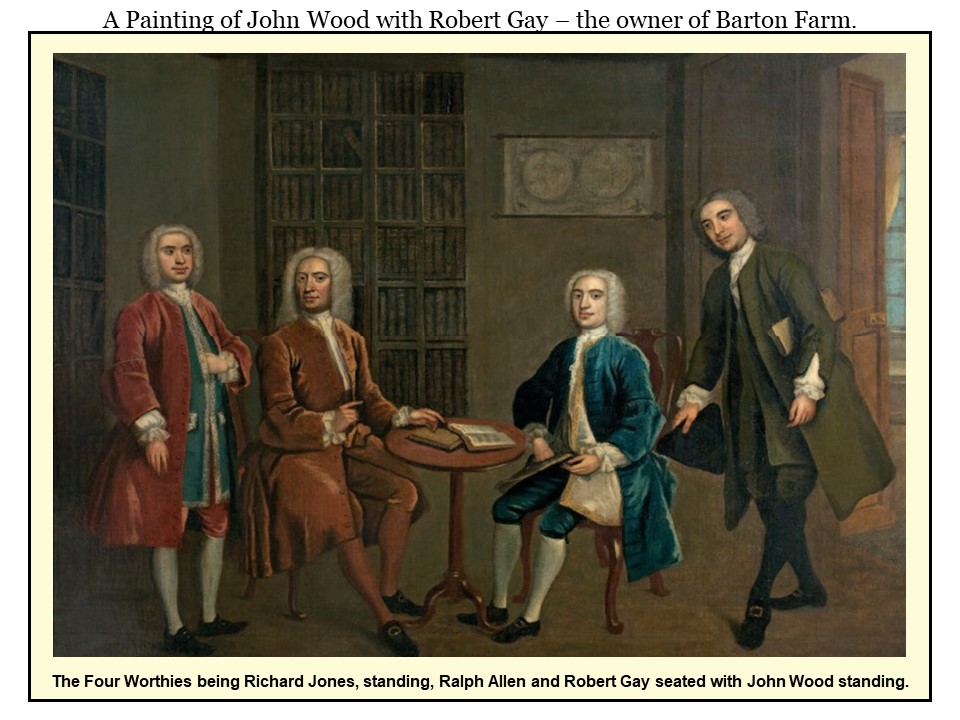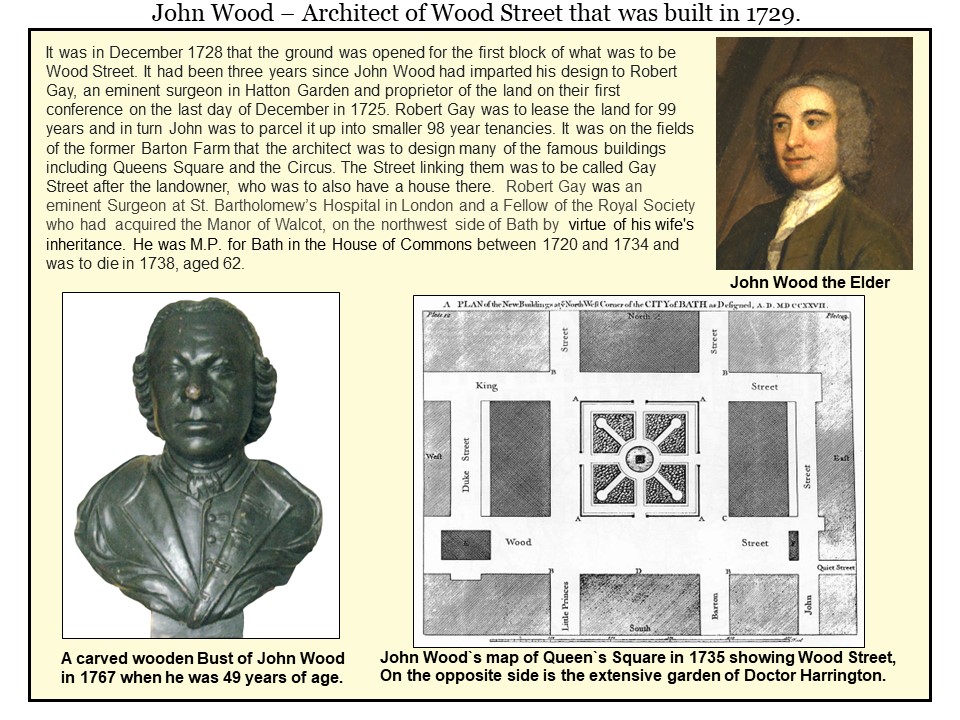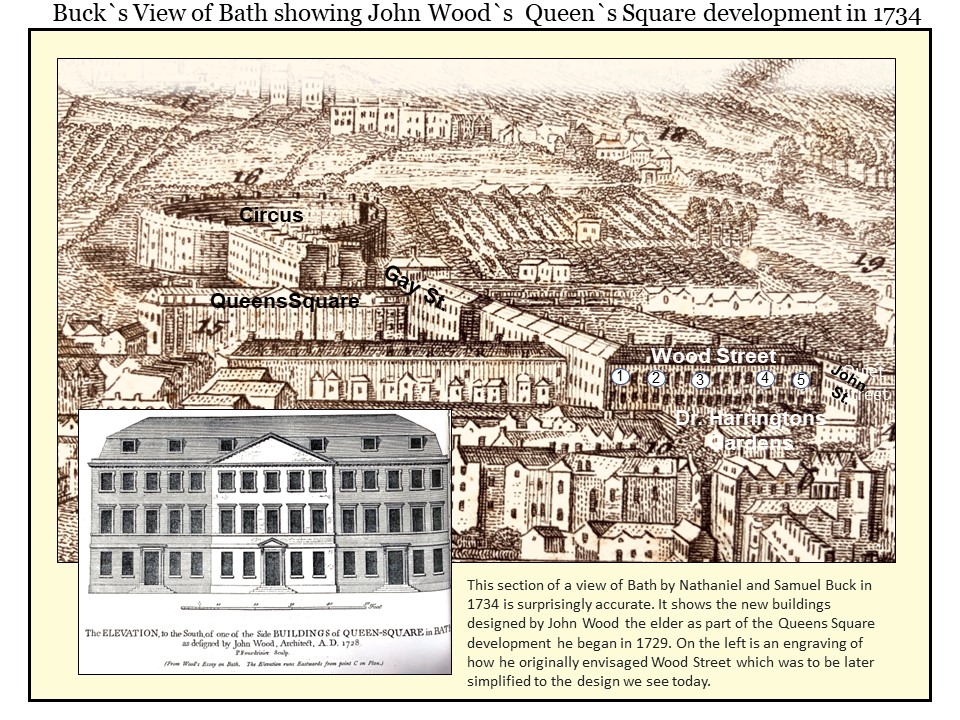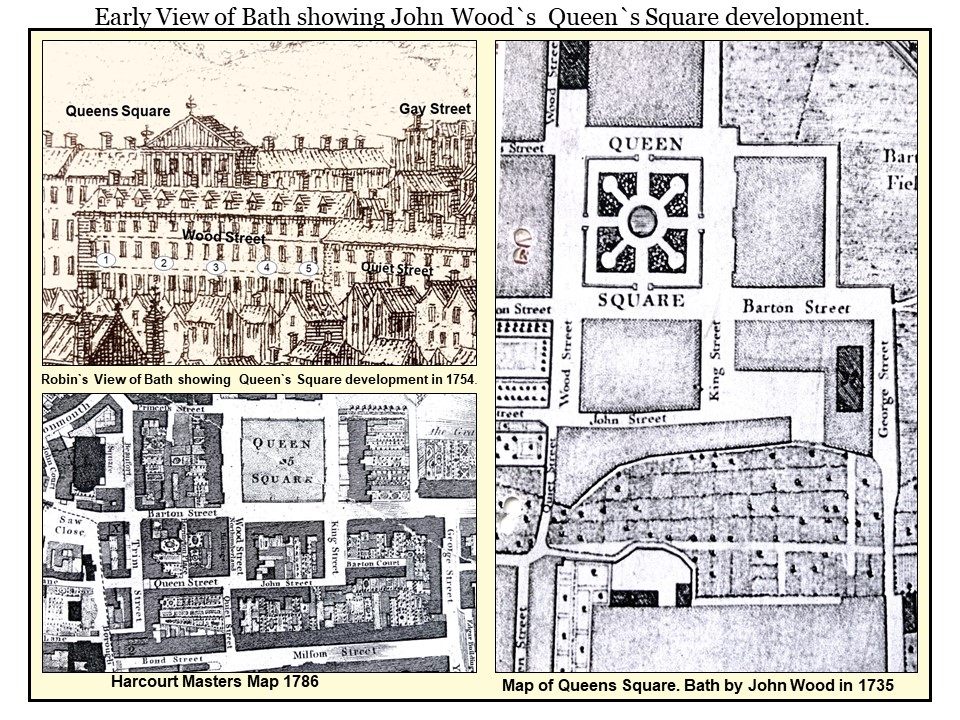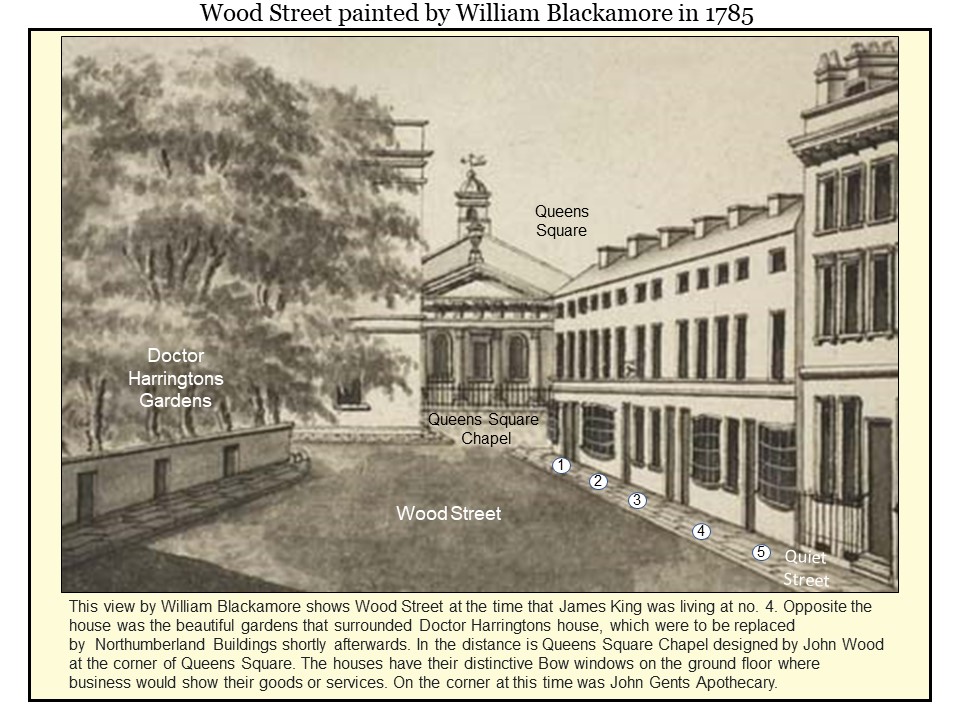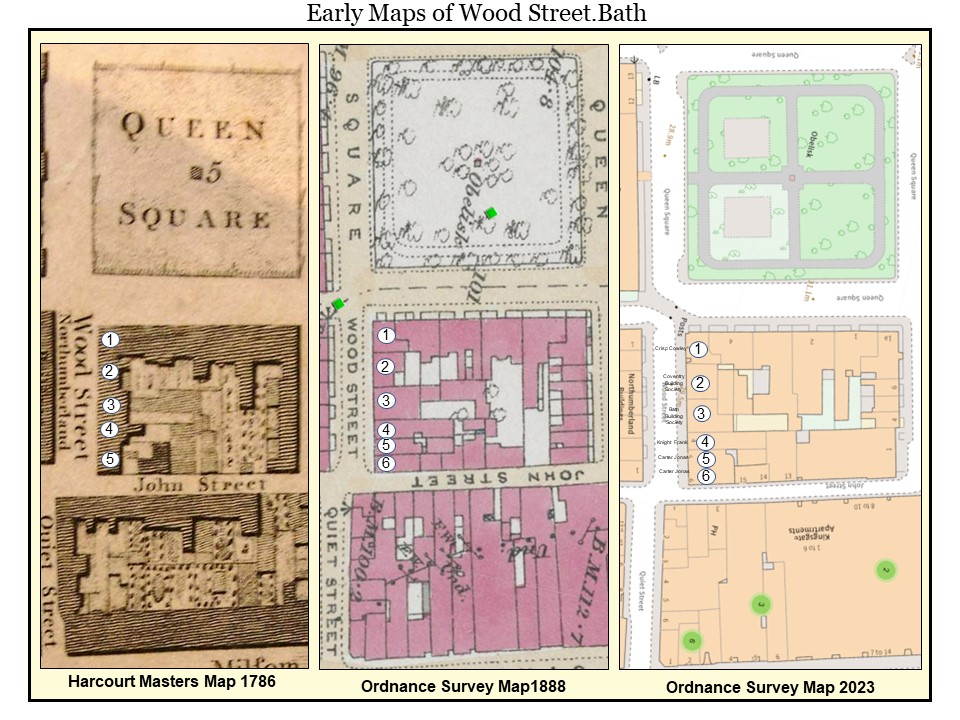
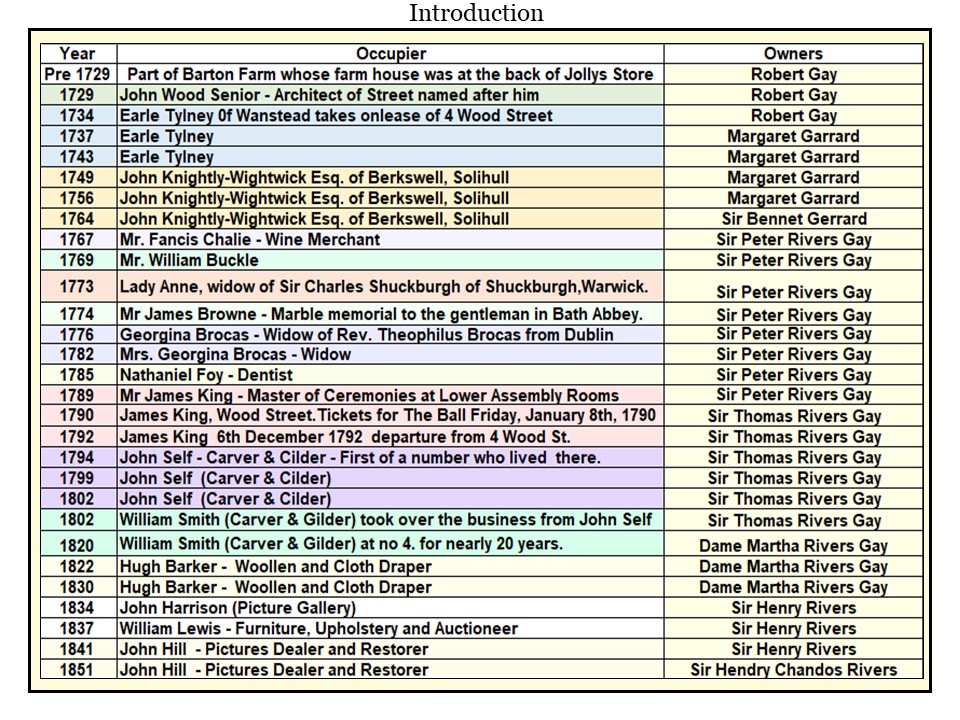
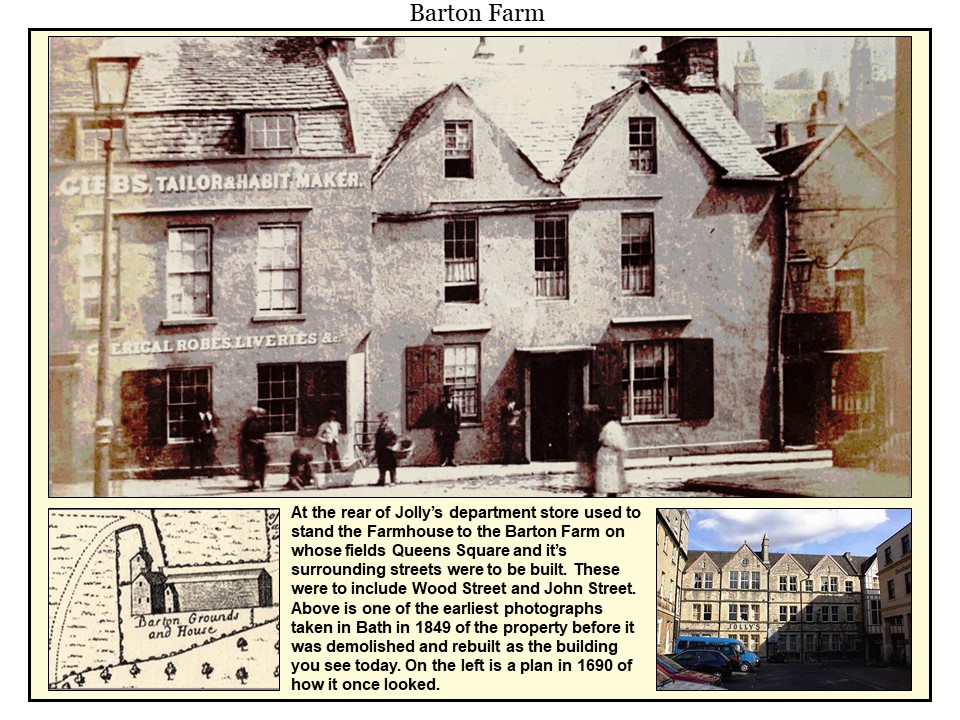
No.4 Wood Street, now named Tylney House after its first occupant in 1734 is almost 300 years old. The street was to be the first that the famous Bath architect, John Wood was to build as part of his larger Queen Square development. The first stone was laid at its corner in January 1729 and was to be named after him. John had the previous year agreed with the land owner, Robert Gay to a 99 year lease on the fields on which it was to be built. He then divided it into smaller plots which he leased out to a number of builders. Robert had inherited the fields that constituted Barton Farm from his wife and on his death in 1738 was to pass it to the Rivers family. They were to own the ground rents through succeeding generations until they were sold in 1919.
John Wood after completing Wood Street created Queens Square and the streets around it. He went on to design The Circus which was linked by Gay Street, named after its Land owner. Unfortunately, he never saw it finished and it was his son of the same name who was to continue his work which culminated in the magnificent Royal Crescent which was completed in 1775.
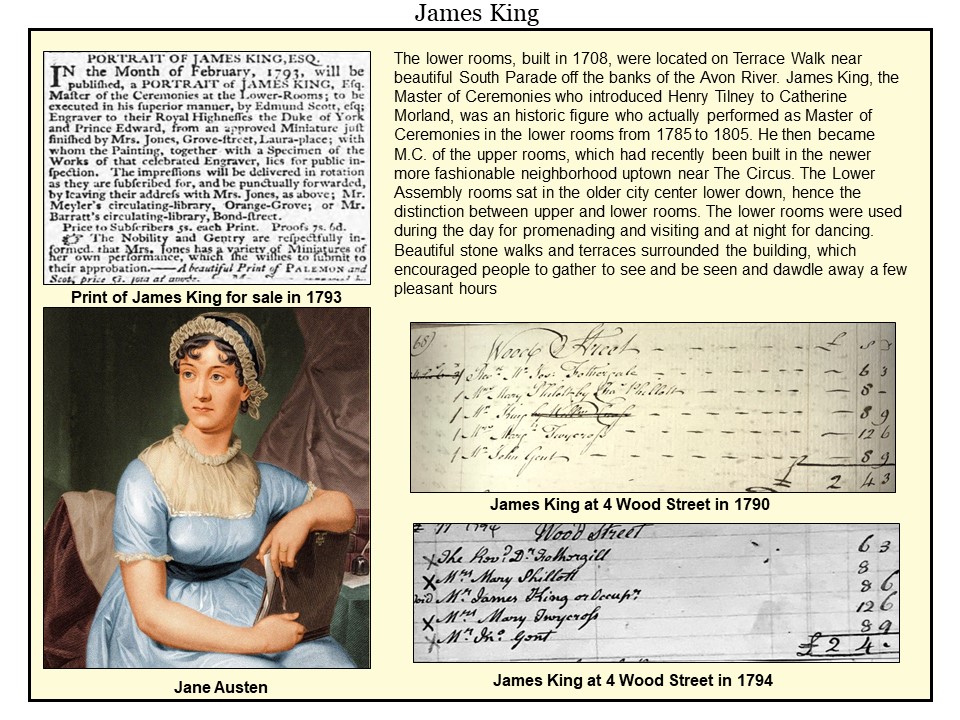
Bath is fortunate in that their Record Office in the basement of the Guildhall has an almost complete run of rate books from when Wood Street was first let to date. Usually, it is difficult to establish ownership of a property as it can be different to the occupier. In the case of Wood Street, the Rivers family were never to occupy any of their houses. There are a few rate books missing and I have found censuses, newspapers and directories helpful to fill the gaps. I was amazed at how often the tenants would advertise in the Bath Chronicle and thanks to the Newspaper Archives website was able to add them to this history. The pile of deeds I was given when I bought the property were useful even though they only went back to 1922 when the freehold was sold by a descendant of the Rivers Family.
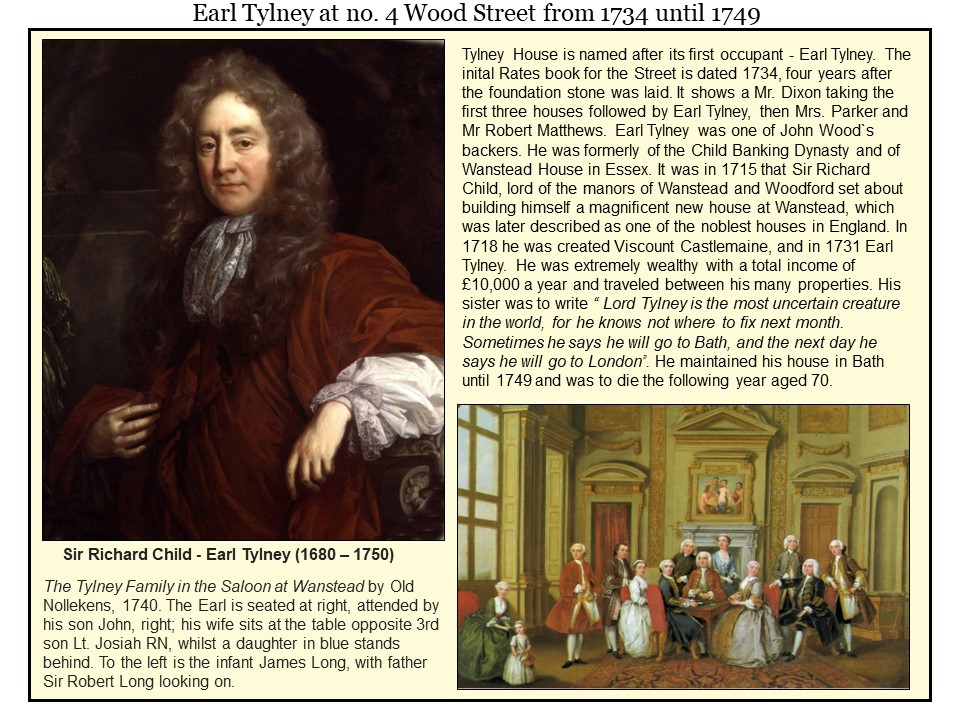
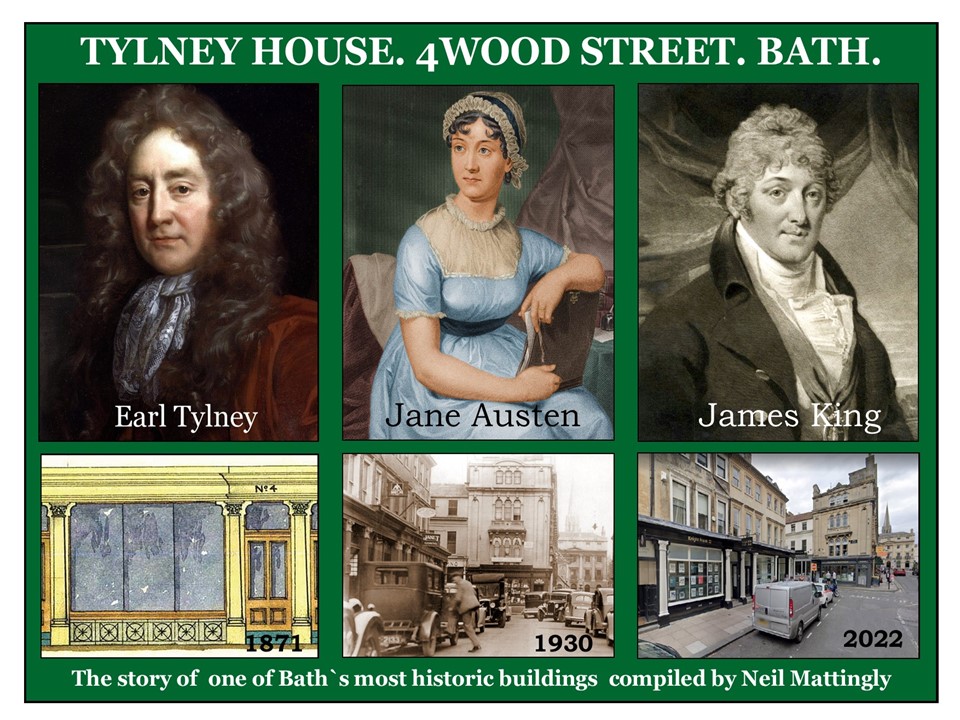
It is Earl Tylney who appears in the City Rates Book as the first occupant in 1734, almost 4 years after it was started. He was extremely wealthy with an income of £10,000 a year and owner of the magnificent Palladian mansion at Wanstead. He was a friend of John Wood and helped finance the development with him. He was born Sir Richard Child and was a member of a famous Banking dynasty. It was in 1731 that he was created Earl Tylney.
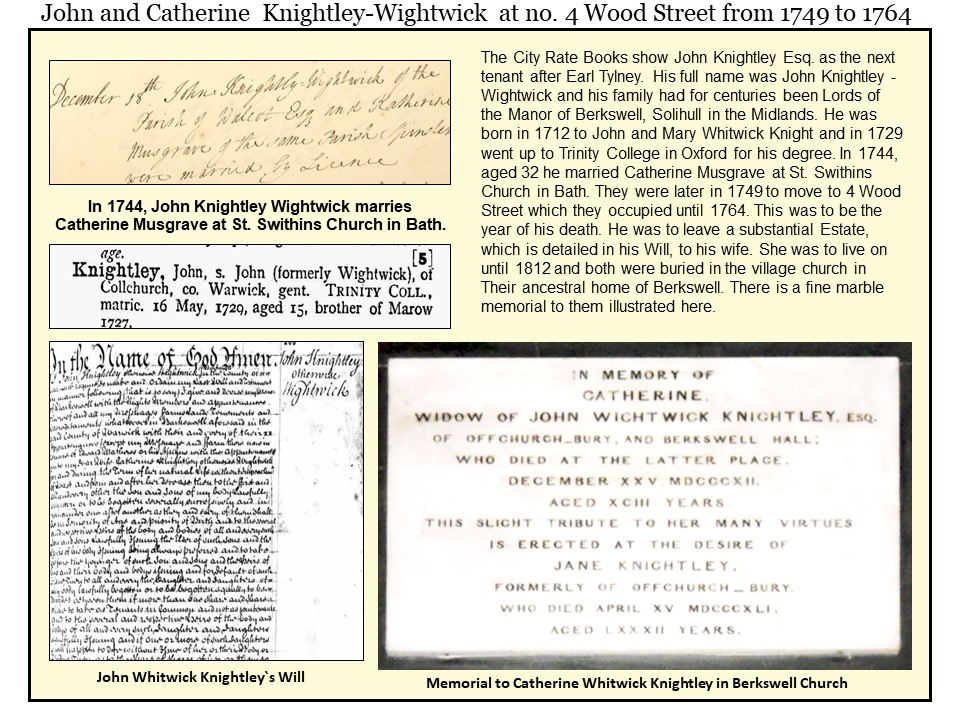
The City Rate books reveal that it was in 1749 that John Knightley-Whitwick took over the lease at no.4 Wood Street. His family were for centuries lords of the Manor of Berkswell, near Solihull. He was born in 1712 and went up to Oxford in 1729. He arrived in Bath in 1744 where he married Catherine Musgrave and five years later they were living at 4 Wood Street where they remained until his death in 1764.
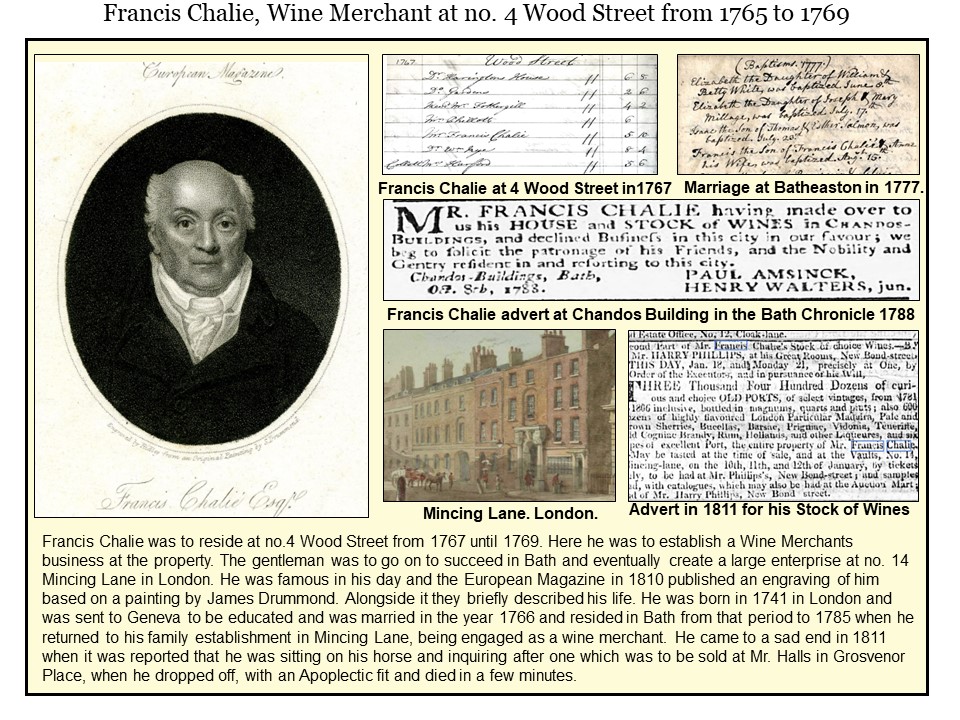
The next tenant was Francis Chalie, a French Huguenot, who was a Wine Merchant whose family were established in Pudding Lane in London in that trade. He advertised in the Bath Chronicle and later moved his business to Chandos Buildings in Bath. He eventually ended up back in London where he was to die in 1811. He was famous in his day and a painting of him by James Drummond later was engraved and appeared in the European Magazine.
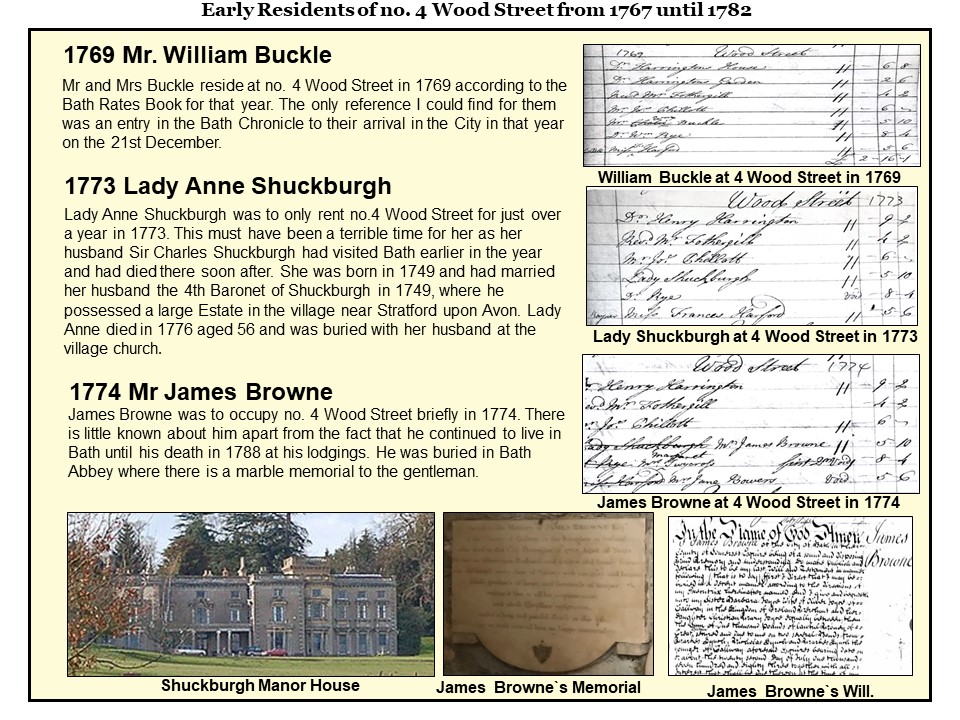
The Rates Books reveal a number of wealthy tenants including Lady Anne Shuckburgh, who moved to Bath on the death of her husband in 1773. Sadly, she was to pass away herself just 3 years later and was buried in the family vault at Shuckburgh, near Stratford upon Avon.
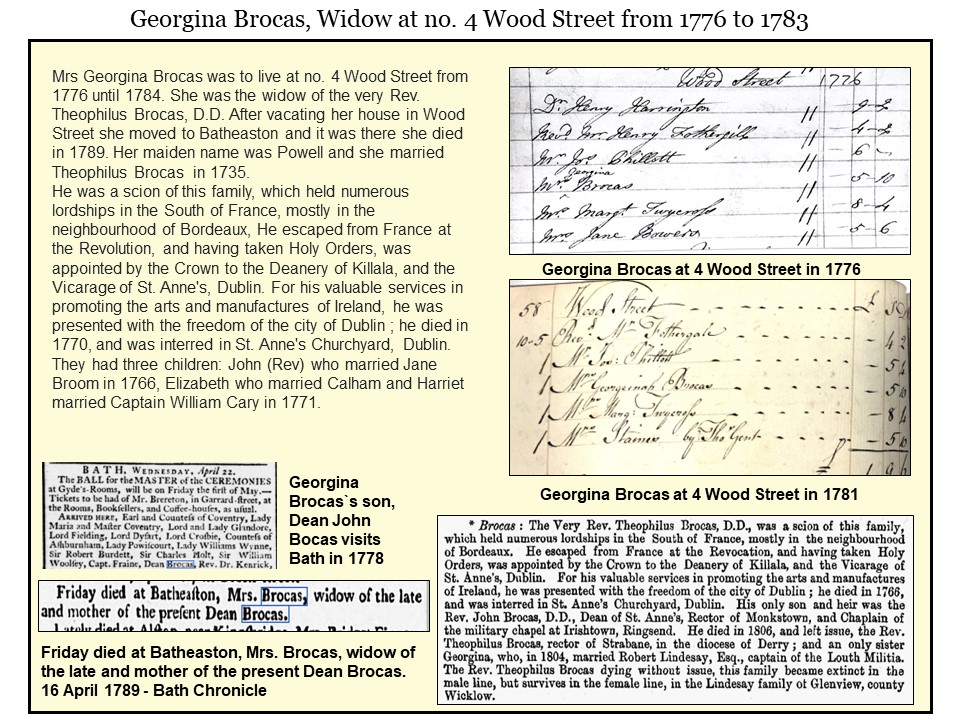
It is Georgina Brocas who next appears as a tenant in 1776. She was the widow of the Rev. Theophilus Brocas. She had previously lived in Dublin, where her husband had been made a Freeman as a result of his promotion of the Arts in the city. Georgina had three children and her eldest John went on to be a Dean in Ireland as his father had before. Georgina was to Iive at no. 4 until 1783 when she moved to Batheaston and it was here she was to die in 1789.
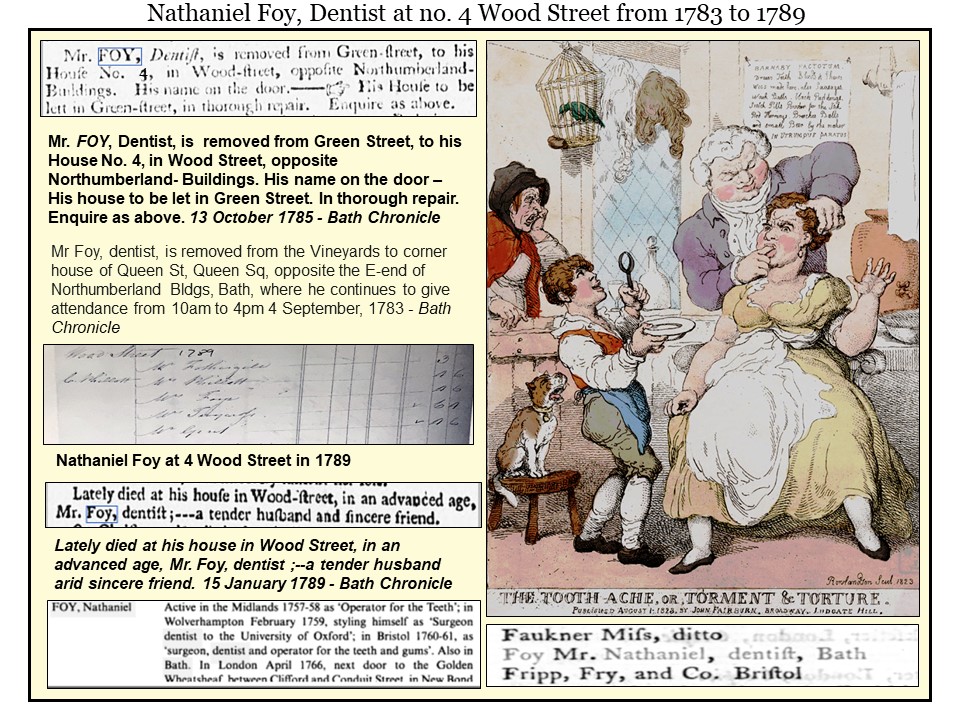
After so many wealthy tenants it came as a surprise to see that the next occupier was a dentist. Nathaniel Foy was to run his practice there for six years until his death in 1789.
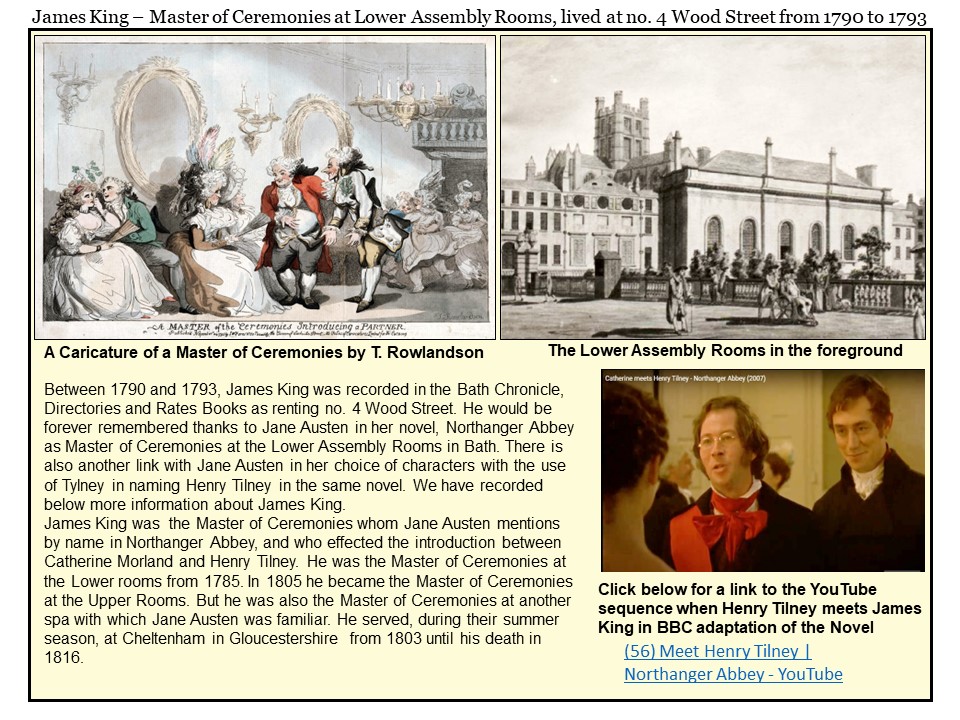
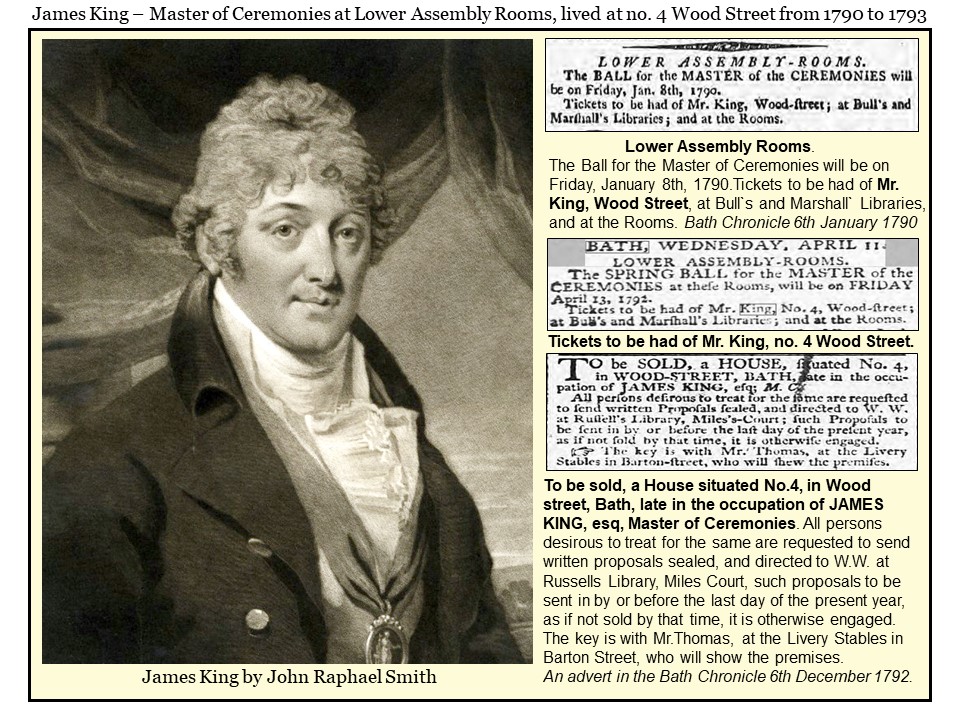
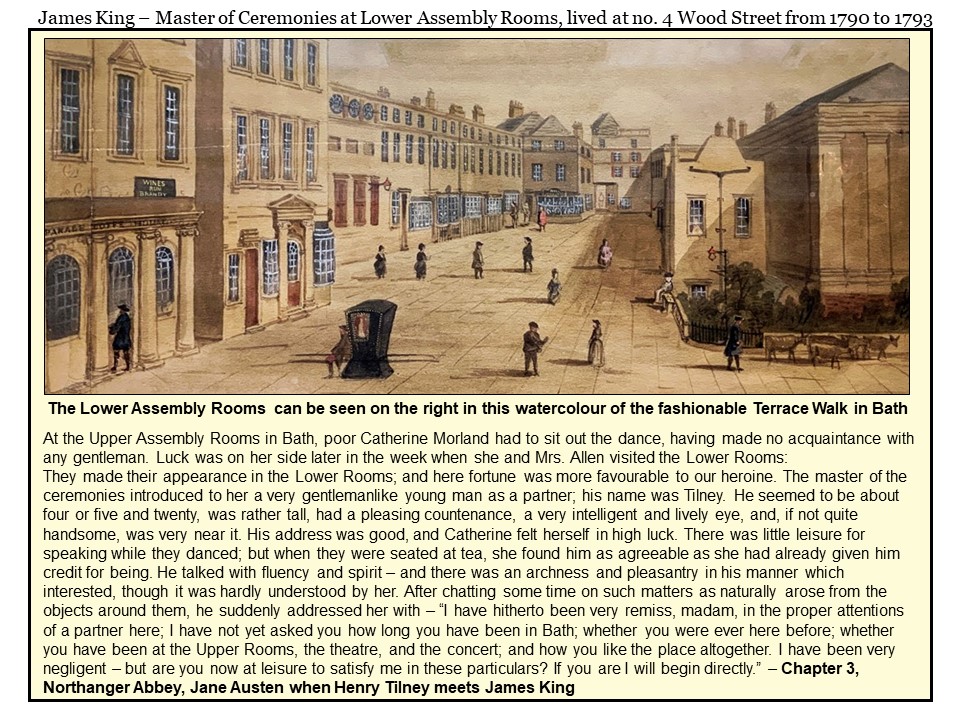
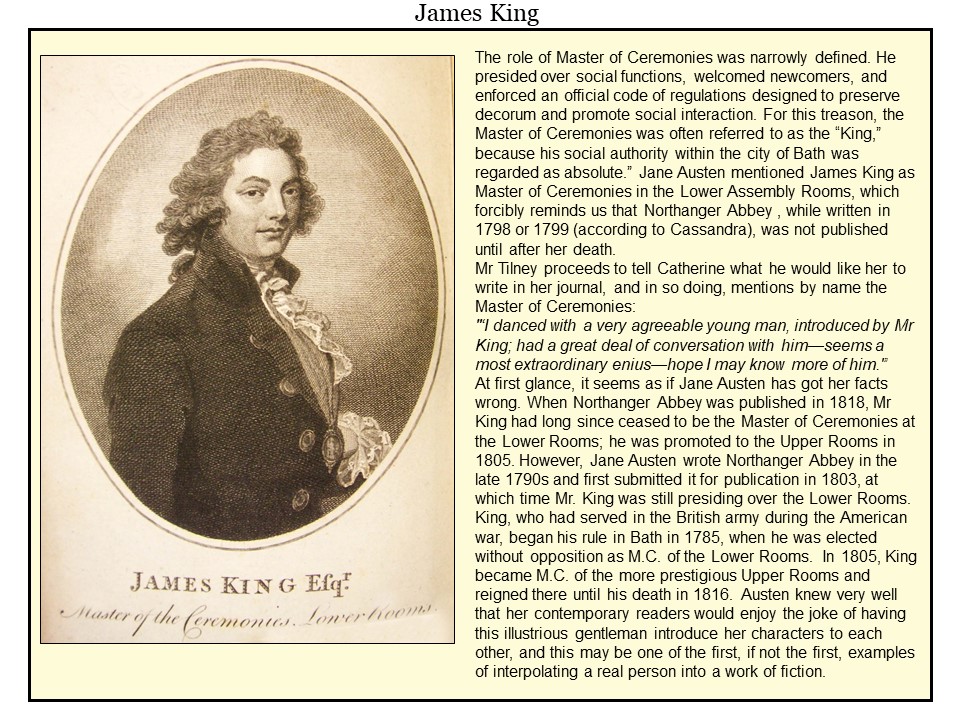
It was very exciting to find that the nest gentleman to live at no.4 Wood Street was to be a national figure. For in 1790 James King moved into the property. It was to be Jane Austen who was to make him famous as one of the only true life characters that she used in her novels. He appears in Northanger Abbey as Master of Ceremonies at the Lower Assembly Rooms. It is he who introduced Henry Tilney to Catherine Moreland. It may be just coincidental that she chose a similar name to that of Earl Tylney, the first occupant of no. 4 Wood Street James King not only appears in the Rate Books for three years, but also in advertisements in the Bath Chronicle at 4 Wood Street. In 1792 he was promoting his Spring Ball for which he was selling tickets at his home address.
At the end of this chapter of the history of the building there is a change in the style of occupancy. It would seem that for the next 200 years with some exceptions that it would become a center for art. Initially for framing and gilding and later as an art gallery where many famous paintings were displayed and sold.
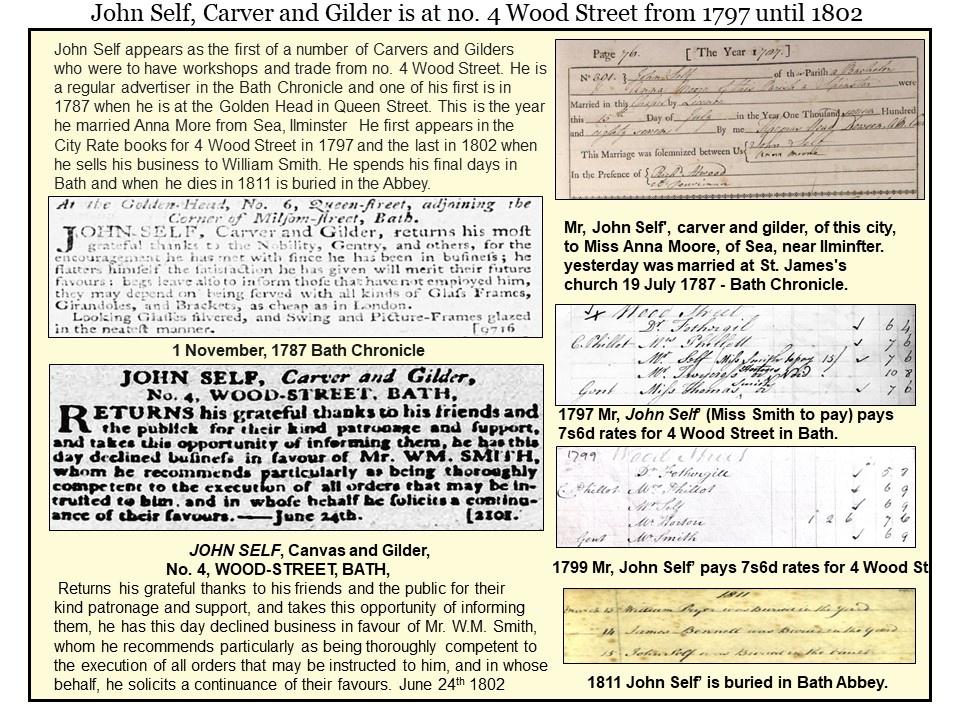
The first record of the change in tenants was in 1797 with John Self, who was a carver and Gilder. He would have had workshops and traded from the address. He had formerly been at the Golden Head at no. 6 Queen Street from 1787 where his adverts show him welcoming “Nobility and Gentry” to his establishment. He appears in the rate books until 1802 when he sells his business to William Smith. John was to continue to live in Bath until his death in 1811 and is shown to have been buried in the Abbey.
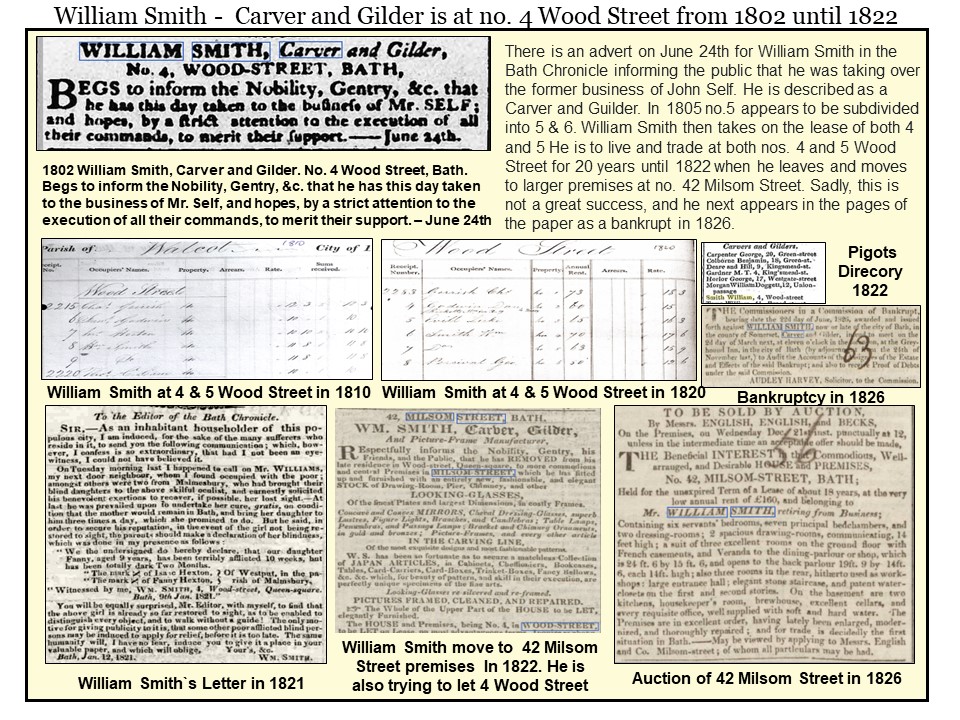
William Smith first advertised in the Bath Chronicle in 1802 when he took over the business of John Self in June of that year. He carried on as a gilder and frame maker until 1822 when he moved to larger premises at 42 Milsom Street. Unfortunately, he overstretched himself and was declared a bankrupt four years later and an advert describes his stock and property which was sold to pay his debts.
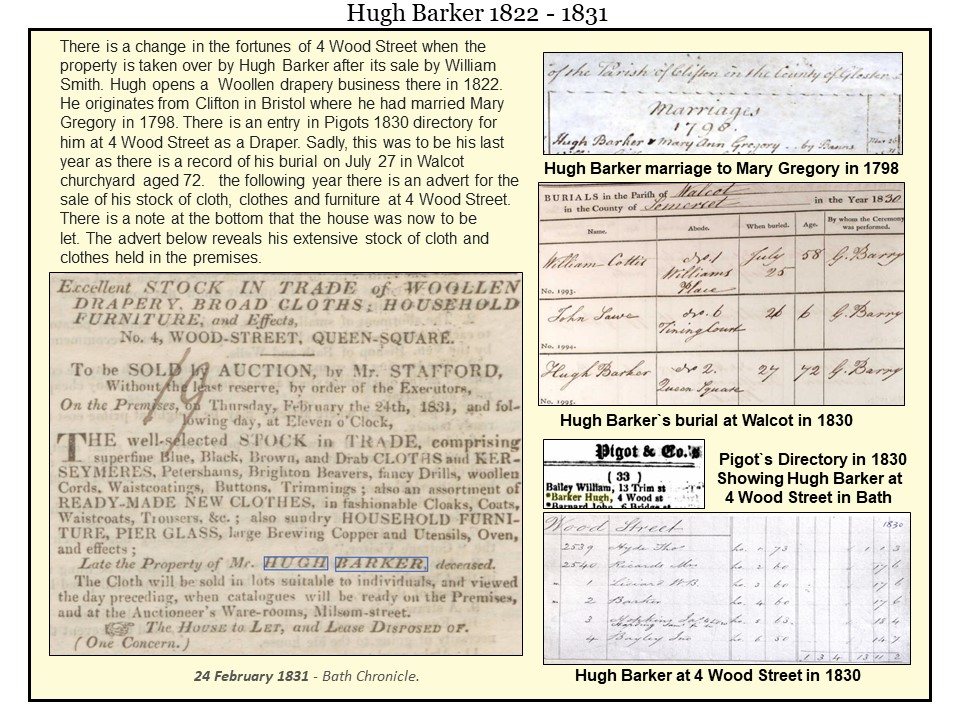
There is a change in the fortunes of 4 Wood Street when the property is taken over by Hugh Barker after its sale by William Smith. Hugh opens a Woollen drapery business there in 1822. He originates from Clifton in Bristol where he had married Mary Gregory in 1798. There is an entry in Pigots 1830 directory for him at 4 Wood Street as a Draper. Sadly, this was to be his last year as there is a record of his burial on July 27 in Walcot churchyard aged 72. the following year there was an advert for the sale of his stock of cloth, clothes and furniture at 4 Wood Street. There is a note at the bottom that “his house in Wood Street was now to be let”.
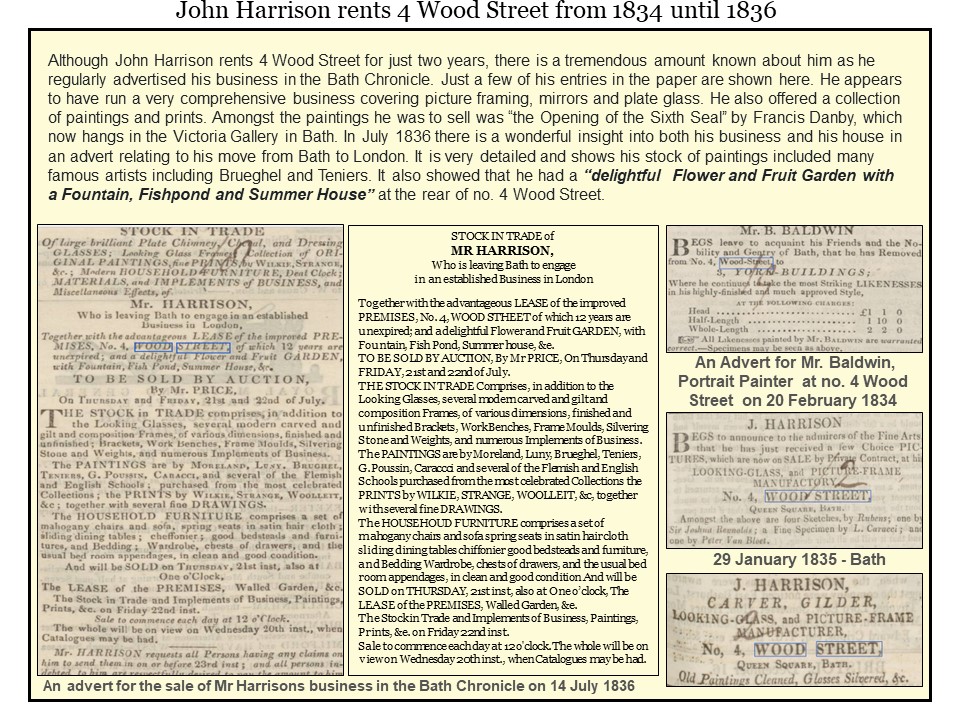
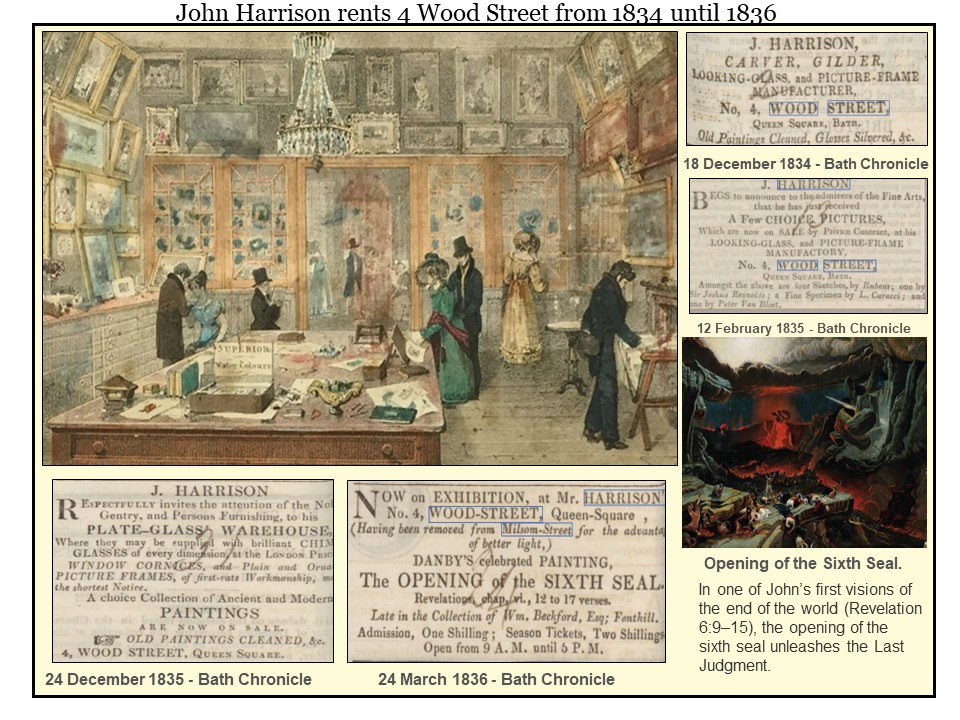
Although John Harrison rents 4 Wood Street for just two years, there is a tremendous amount known about him as he regularly advertised his business in the Bath Chronicle. He appeared to have run a very comprehensive business covering picture framing, mirrors and plate glass on the premises.
He also offered a collection of paintings and prints for sale. Amongst the paintings was “the Opening of the Sixth Seal” by Francis Danby, which now hangs in the Victoria Gallery in Bath. In July 1836 there was a wonderful insight into both his business and his house in an advert relating to his move from Bath to London. It is very detailed and shows his stock of paintings included many famous artists including Brueghel and Teniers. It also showed that he had a “delightful Flower and Fruit Garden with a Fountain, Fishpond and Summer House” at the rear of no. 4 Wood Street.
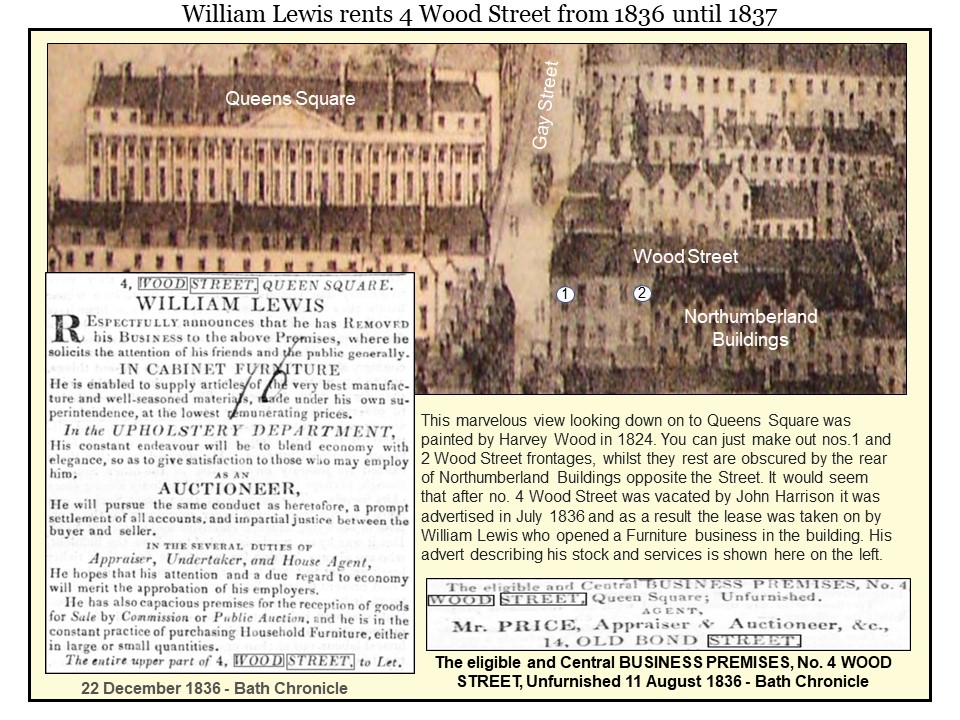
It would seem that after no. 4 Wood Street was vacated by John Harrison it was advertised in July 1836 and as a result the lease was taken on by William Lewis who opened a Furniture business in the building. This only lasted a year and there is a descriptive advert of his stock and premises soon after he vacated the premises the following year.
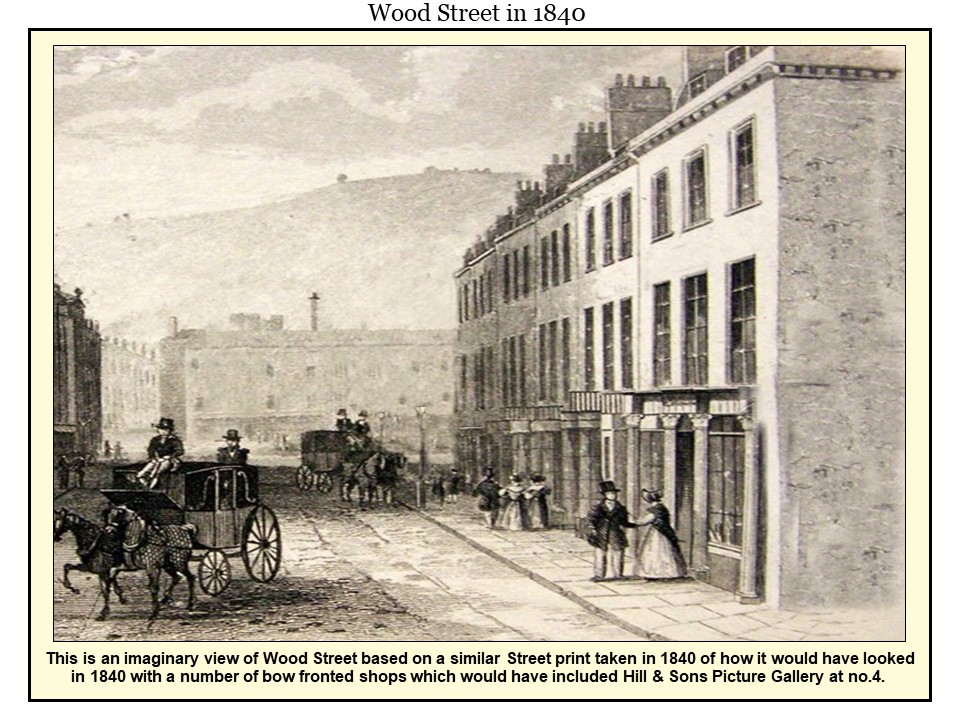
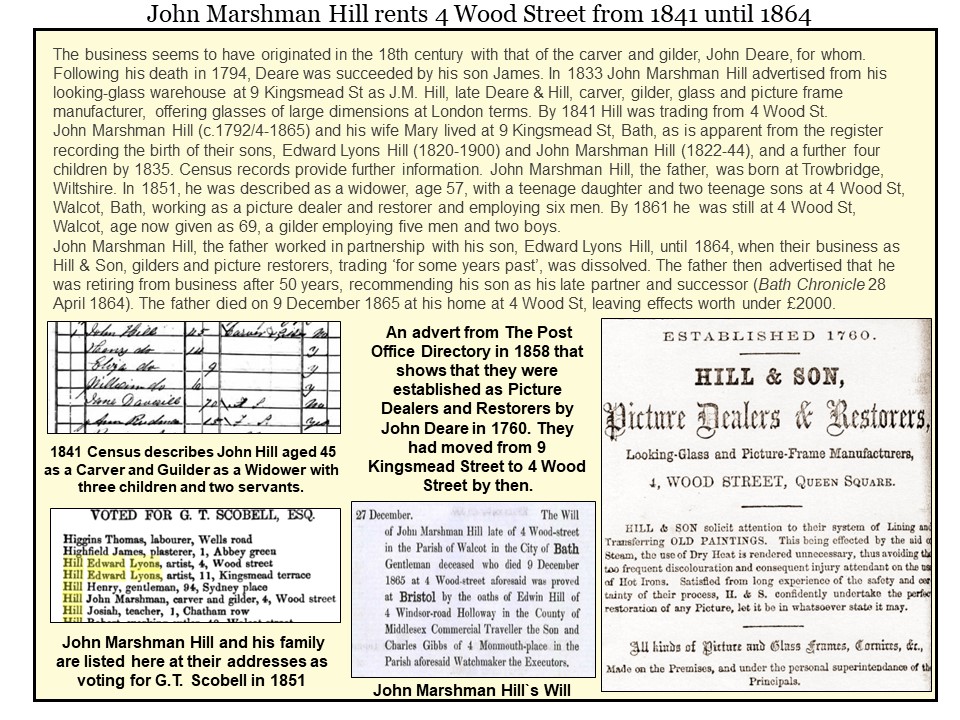
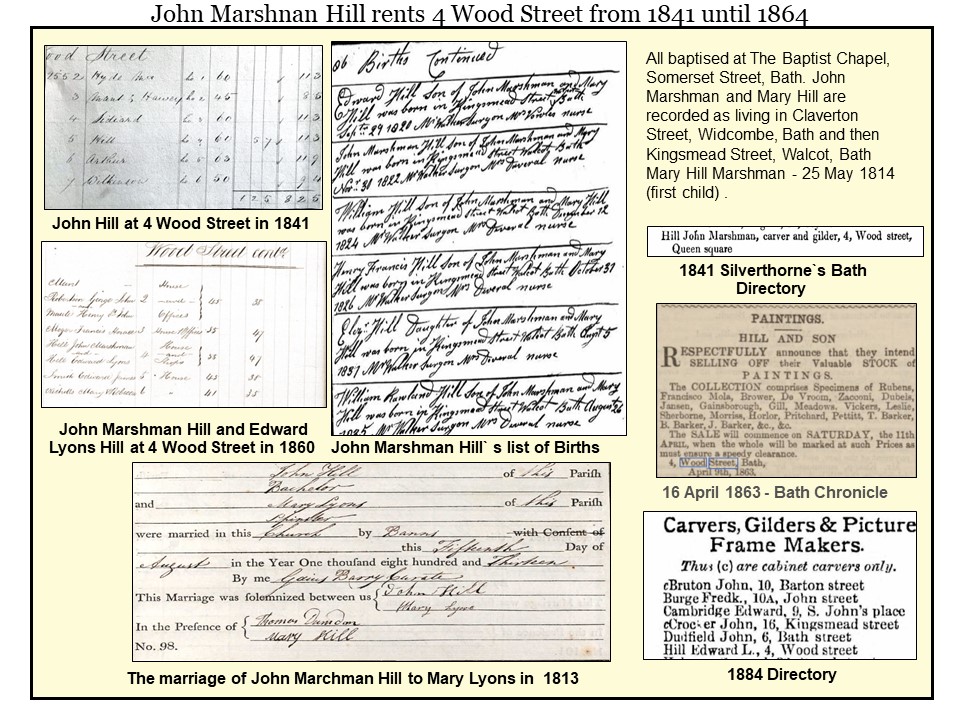
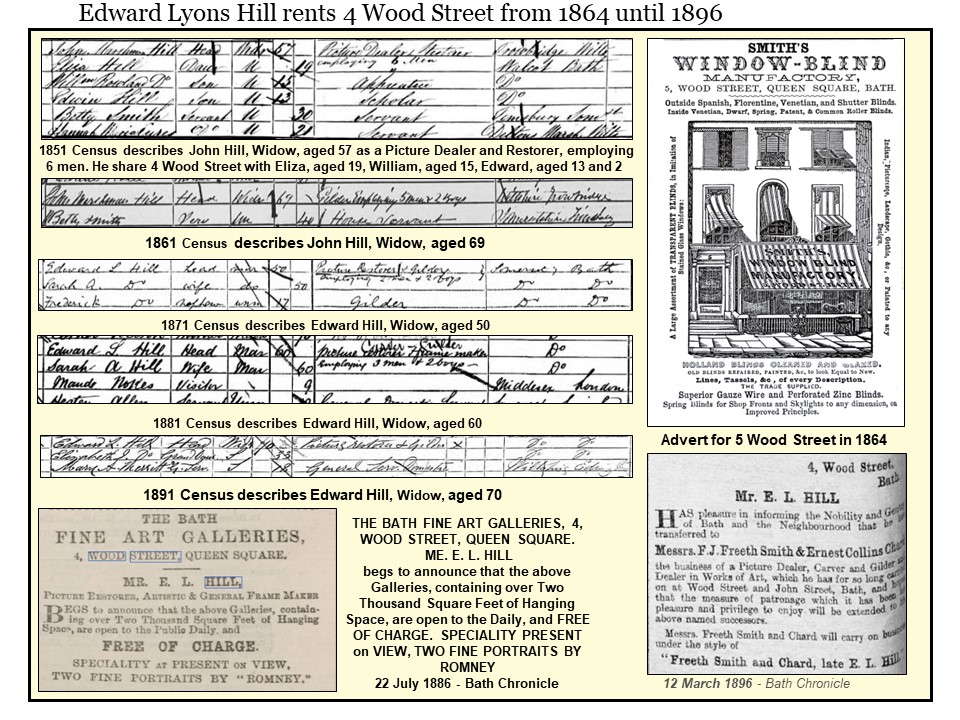
No. 4 Wood Street was now to enter its longest continuous occupation with the purchase of the lease by John Marshman Hill and his son, who for nearly 70 years were Carvers and Gilders there. John had earlier been in partnership with the son of John Deare whose business can be traced back at 9 Kingsmead Street in Bath to 1766. It was at this address that John Marshman Hill advertised from his looking-glass warehouse as J.M. Hill, late Deare & Hill, carver, gilder, glass and picture frame manufacturer in 1833. By 1841 Hill was trading from 4 Wood Street and there is an entry for him in the Census for that year, aged 45 as a Widower with three children and two servants living there.
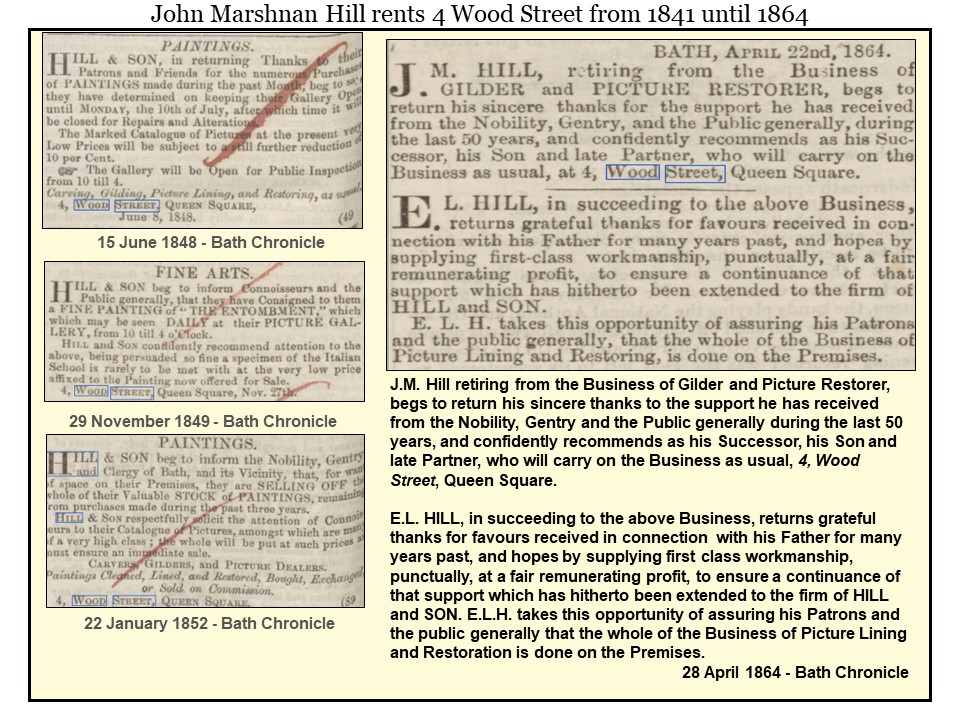
He was later to work in partnership with his son, Edward Lyons Hill, until 1864, when their business as Hill & Son, gilders and picture restorers was dissolved. The father then advertised that he was retiring from business after 50 years, recommending his son as his late partner and successor The father died on 9 December 1865 at his home at 4 Wood Street.
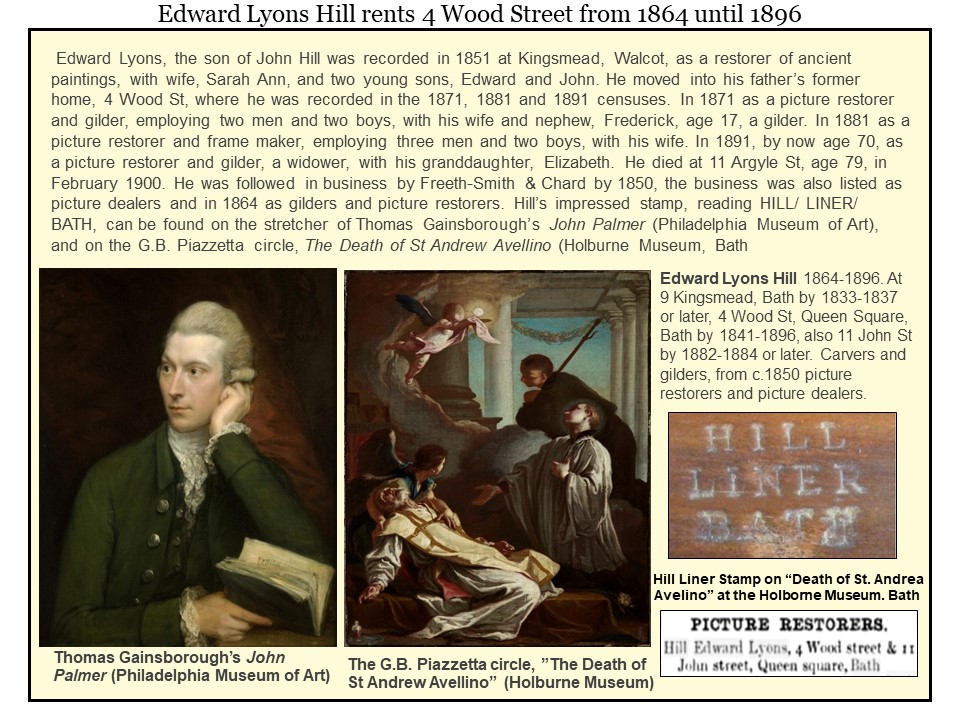
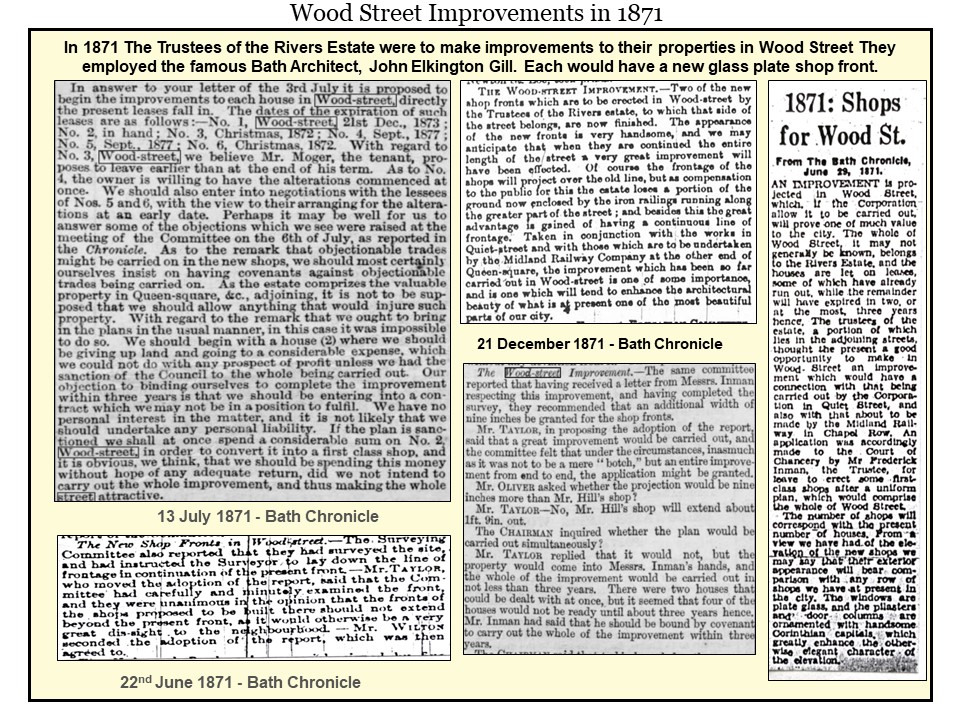
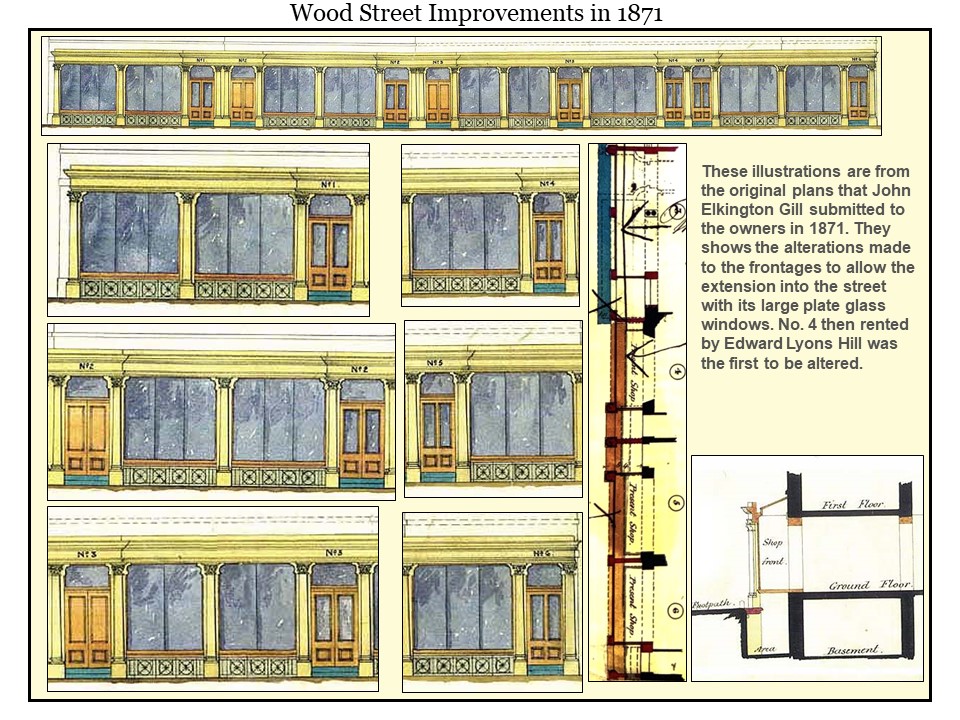
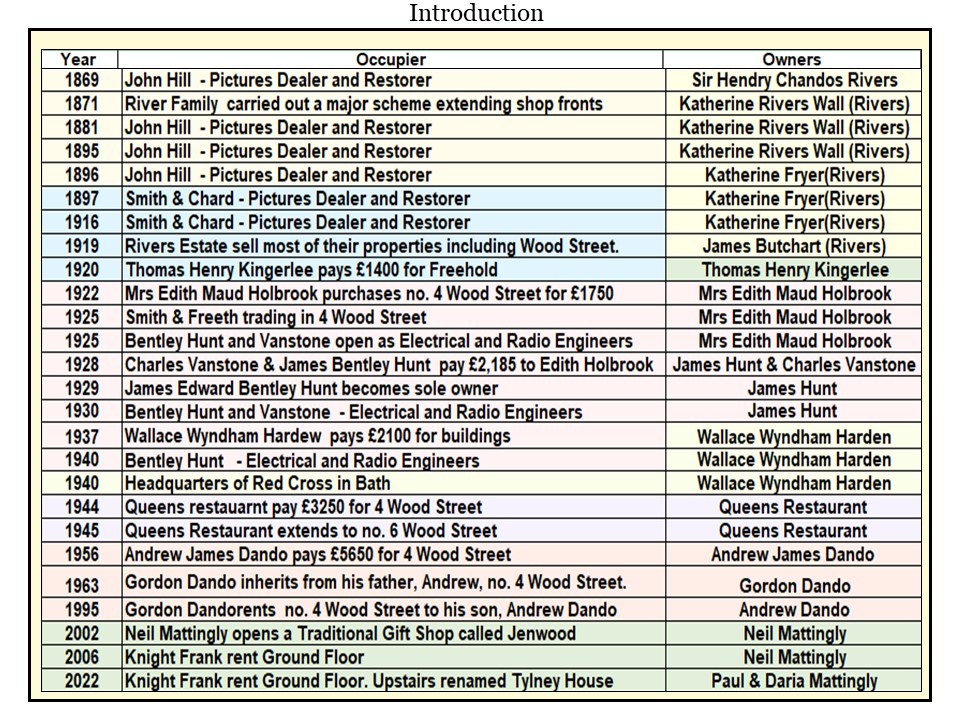
Edward Lyons, the son of John Hill was recorded in 1851 at Kingsmead, as a restorer of ancient paintings, with wife, Sarah Ann, and two young sons, Edward and John. He moved into his father’s former home, 4 Wood St, where he was recorded in the 1871, 1881 and 1891 censuses. In 1871 as a picture restorer and gilder, employing two men and two boys, with his wife and nephew, Frederick, age 17, a gilder. In 1881 as a picture restorer and frame maker, employing three men and two boys, with his wife. In 1891, by now age 70, as a picture restorer and gilder, a widower, with his granddaughter, Elizabeth. He died at 11 Argyle St, age 79, in February 1900. It was during Edwards time, that in 1871,new plate glass shop fronts were constructed that extended the premises into the Street.
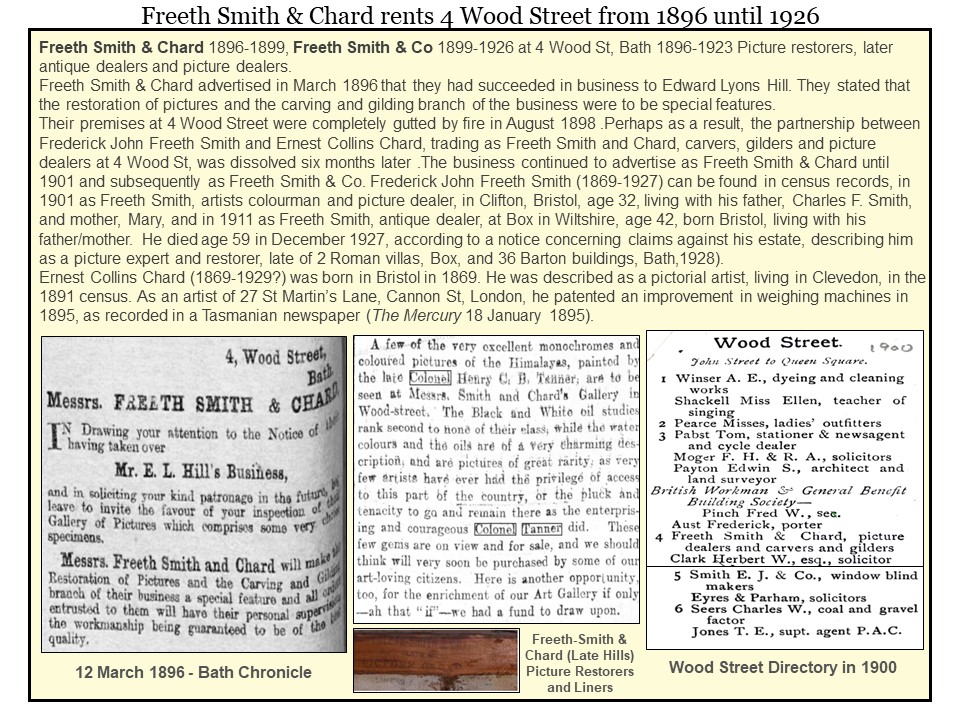
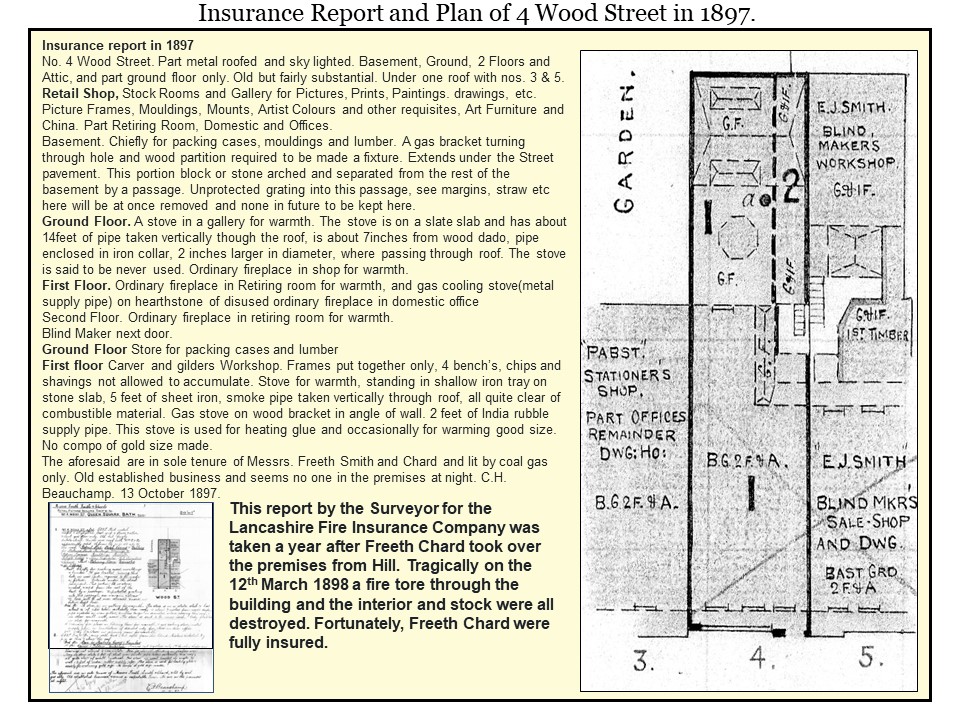
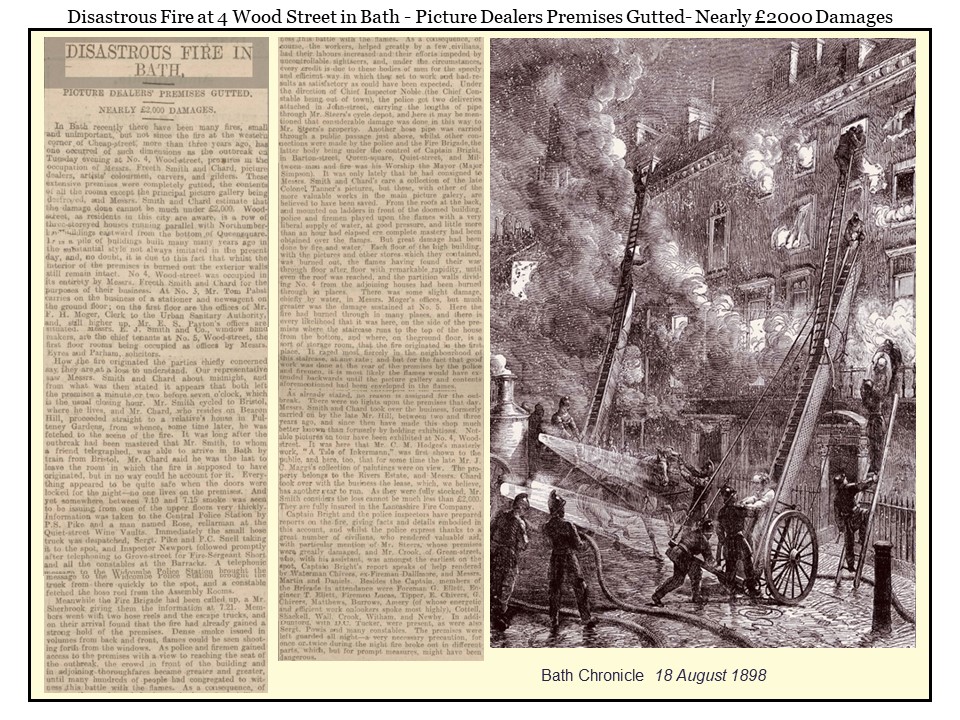
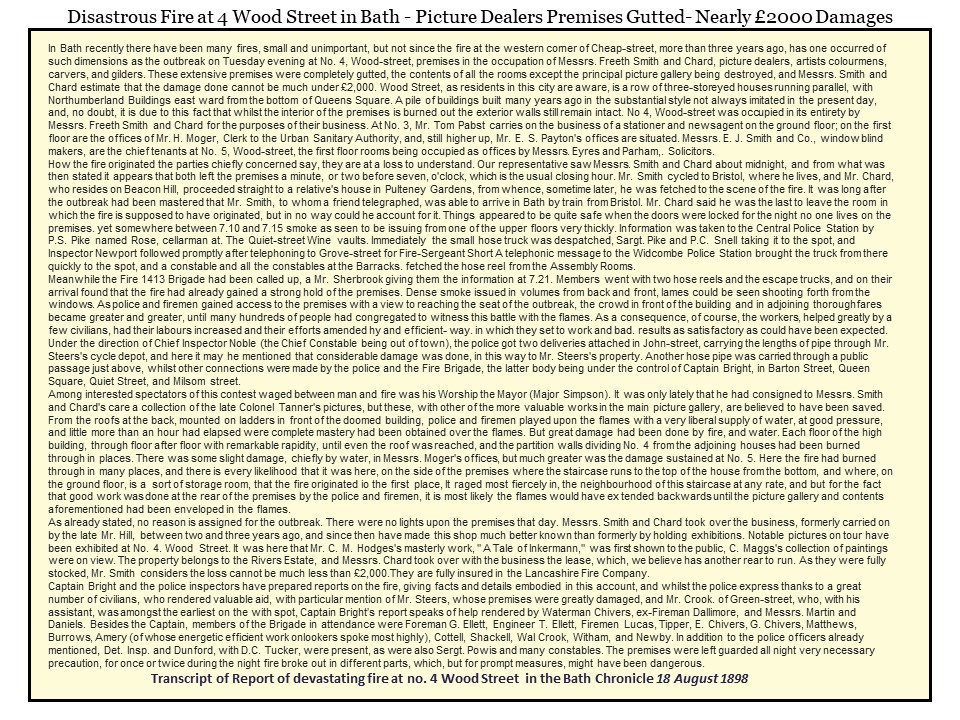
He was followed in business by Freeth-Smith & Chard in 1897 who carried on a similar business there until 1925. The following year after taking on the lease, the building was to suffer a devastating fire that destroyed all their stock and most of the interior apart from their Picture gallery in the former garden at the rear. They were fortunately well insured and their business soon returned. The partnership between Frederick John Freeth Smith and Ernest Collins Chard, trading as Freeth Smith and Chard, carvers, gilders and picture dealers at 4 Wood St, was dissolved six months later .The business continued to advertise as Freeth Smith & Chard until 1901 and subsequently as Freeth Smith & Co. Frederick John Freeth Smith (1869-1927) can be found in census records, in 1901 as Freeth Smith, artists colourman and picture dealer, He died age 59 in December 1927, two years after giving up his lease on 4 Wood Street.
The Rivers family were to be the landlords for most of the properties that formed the Queens Square Estate from its construction in the early 18th century until its eventual sale in 1919.
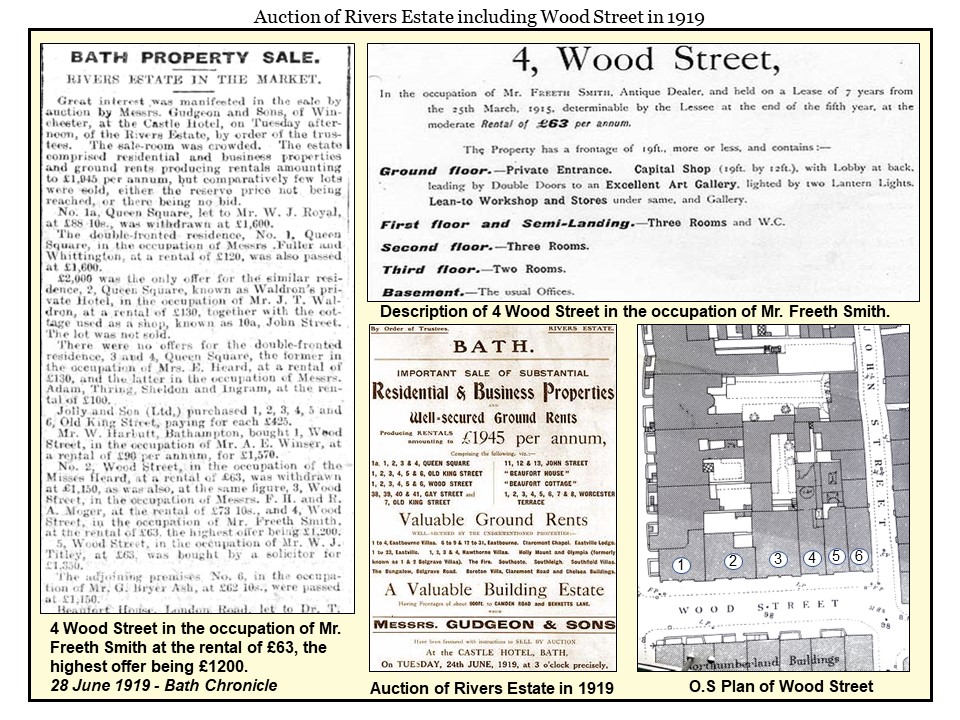
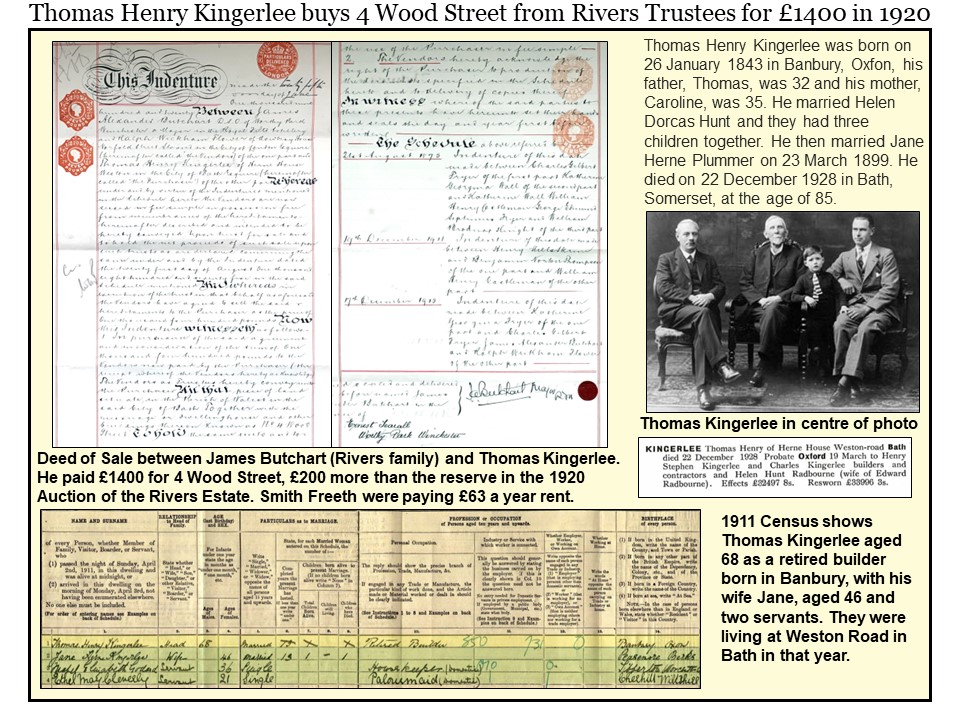
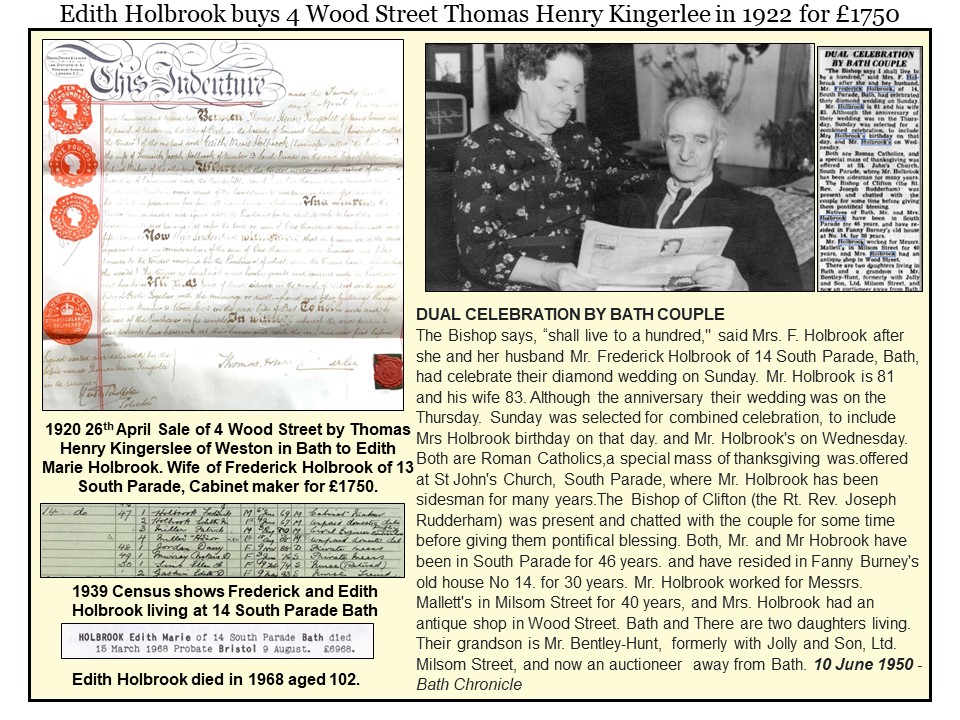
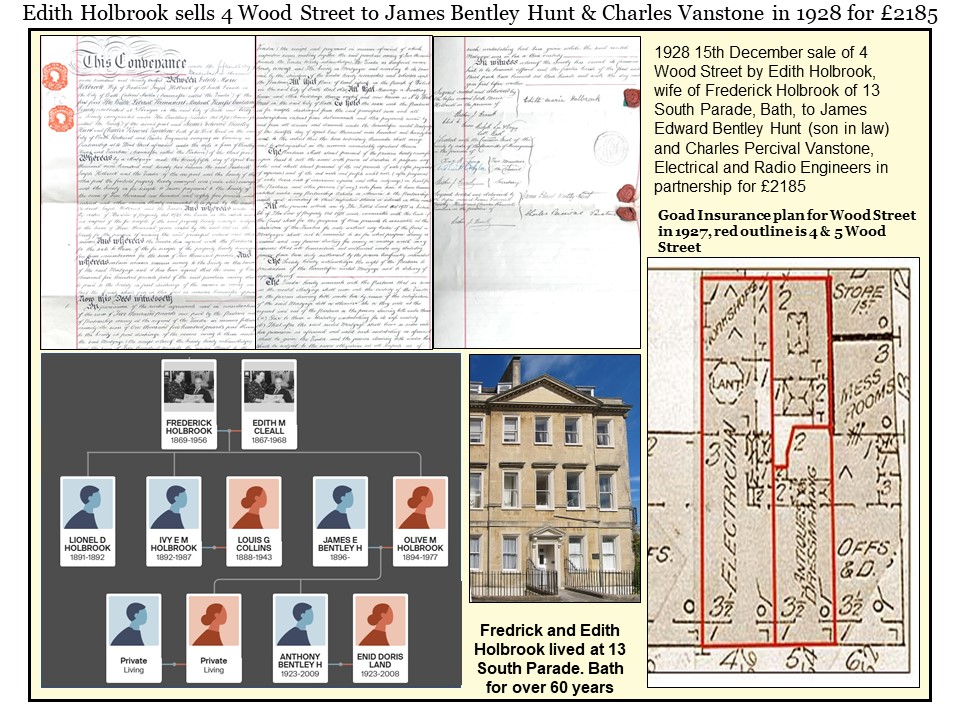
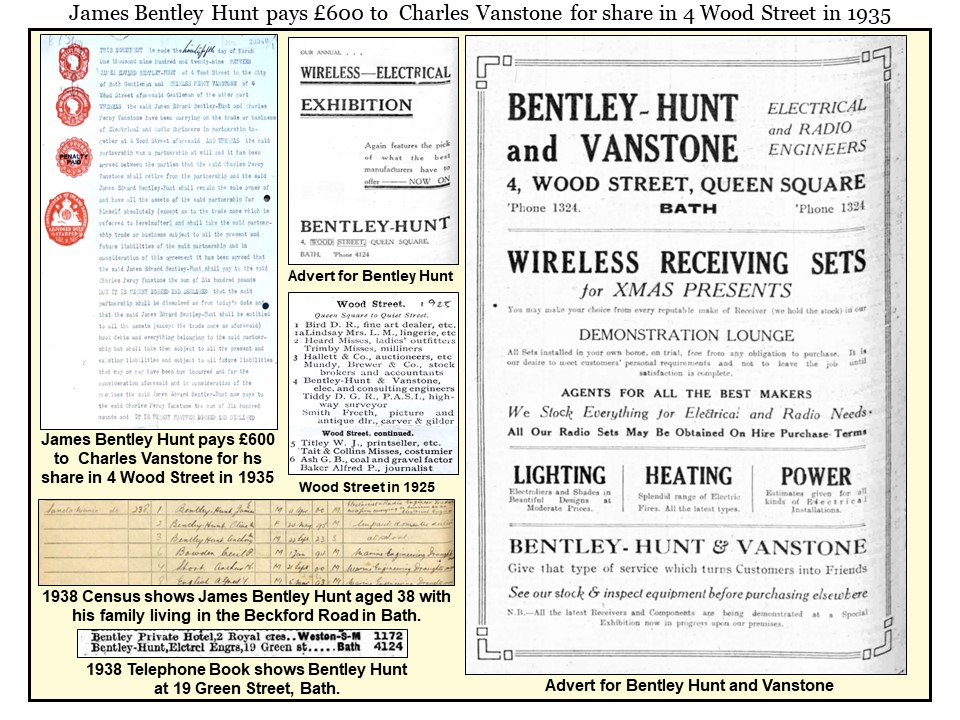
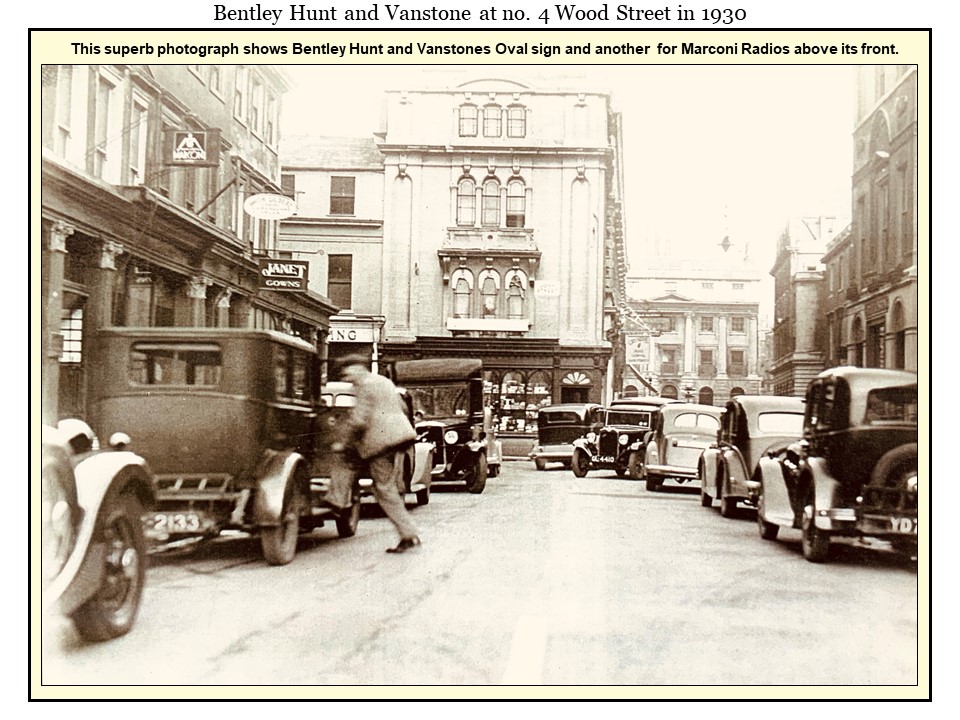
They had seen the rent on no. 4 increase over the years from £3 to £64 per annum over that time. On June 24th 1919 there was an auction of most of their estate at the Castle Hotel in Bath by Gudgeon and Sons. This included Queens Square, Old King Street, Gay Street, John Street as well as all of Wood Street. No. 4 was advertised as being held on a seven year lease from 1915 by Freeth, Smith, Antique Dealers. It failed to reach its reserve of £1200 and was withdrawn. It was retired builder Thomas Kingerlee who the following year was to pay £1400 for the freehold from the Trustees. He would have been 76 at that time and shown as living with his wife at Weston Road in Bath. He held the freehold for just two years and subsequently sold it on April 24th to Mrs. Edith Marie Holbrook for £1750, with Freeth Smith as tenants. Edith would have been 55 in that year and living with her husband, Fredrick at 13 South Parade in Bath. It was to be her son in law, James Edward Bentley Hunt and Charles Percival Vanstone who were to take over the lease in 1925 and open an Electrical and Radio shop there. James would have been just 27 in that year. The business was a great success, and they were able to take out a large mortgage and purchase the freehold from James`s mother in law on the 15th December 1928 for £2185. Rates Books show James living with his wife Olive and two children at the address. He was initially in partnership with Charles Percival Vanstone and in 1935 paid him £600 for his share of the business.
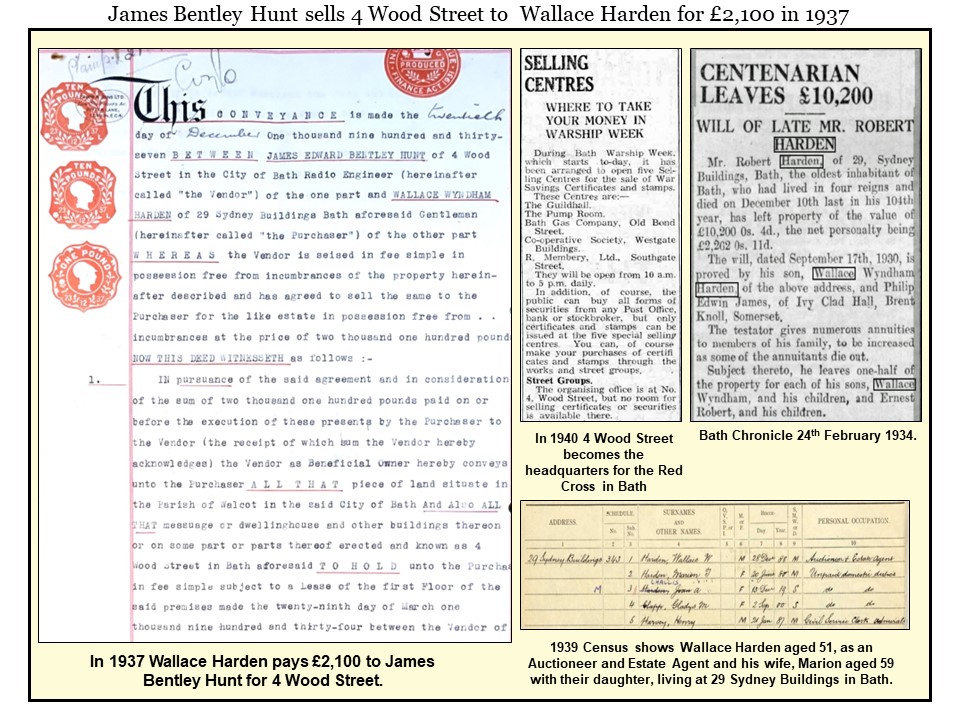
In 1937 Wallace Harden paid £2,100 to James Bentley Hunt for the freehold of 4 Wood Street with him continuing as tenant.
He had married Olive Holbrook in 1922 and in 1939 Census is described as an Electrical Engineer living at Beckford Road and having a business in Green Street in Bath. The Red Cross were to take over the lease on 4 Wood Street in due course for their headquarters during the second world war.
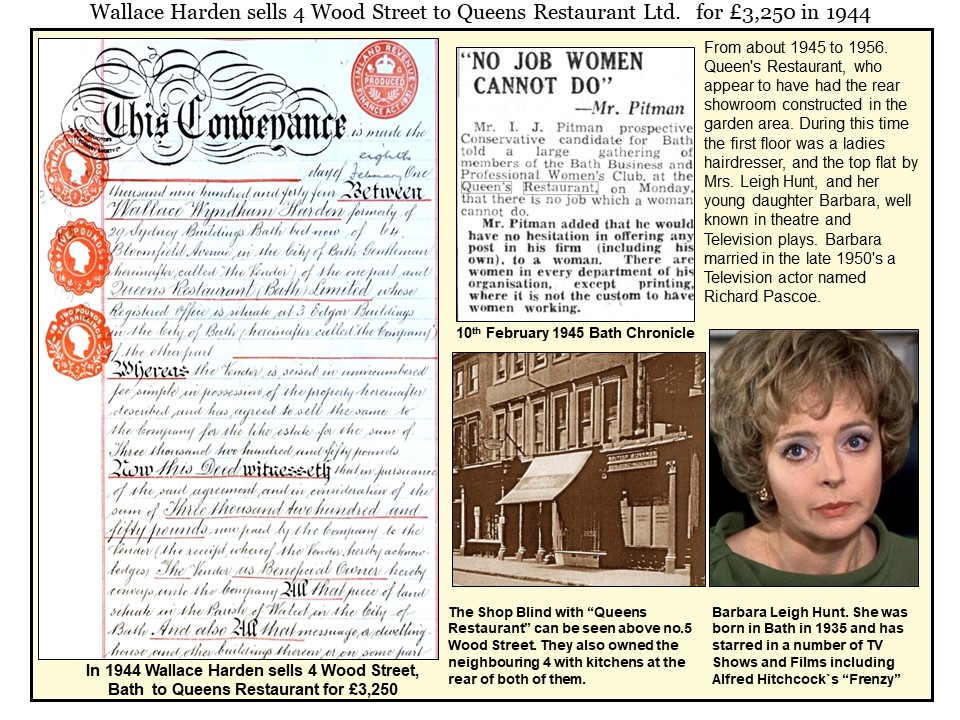
In 1944 The Queens Restaurant paid £3250 to Wallace Harden for the freehold of no. 4 Wood Street and opened it with the neighbouring no. 5 as a Restaurant with kitchens at the rear of the premises. It was a popular meeting place for events which are often documented in the Bath Chronicle.
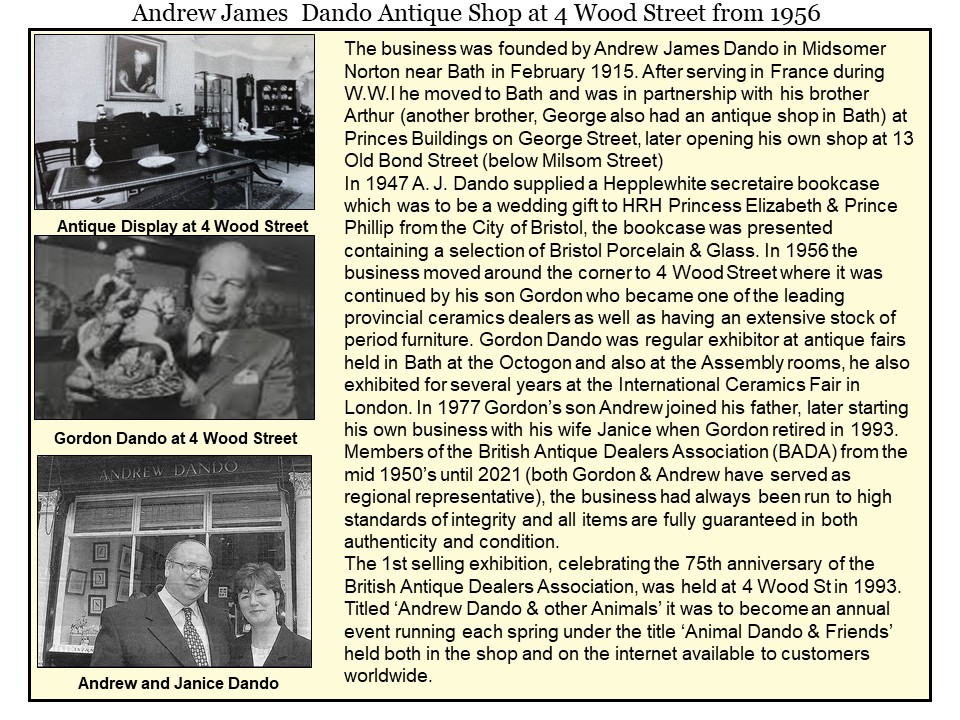
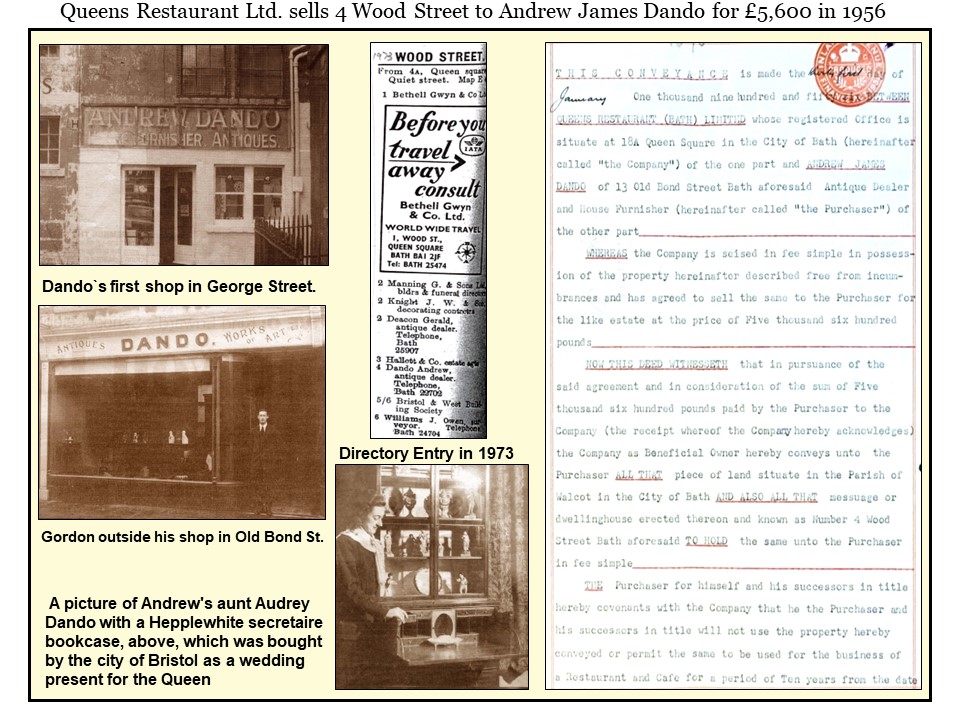
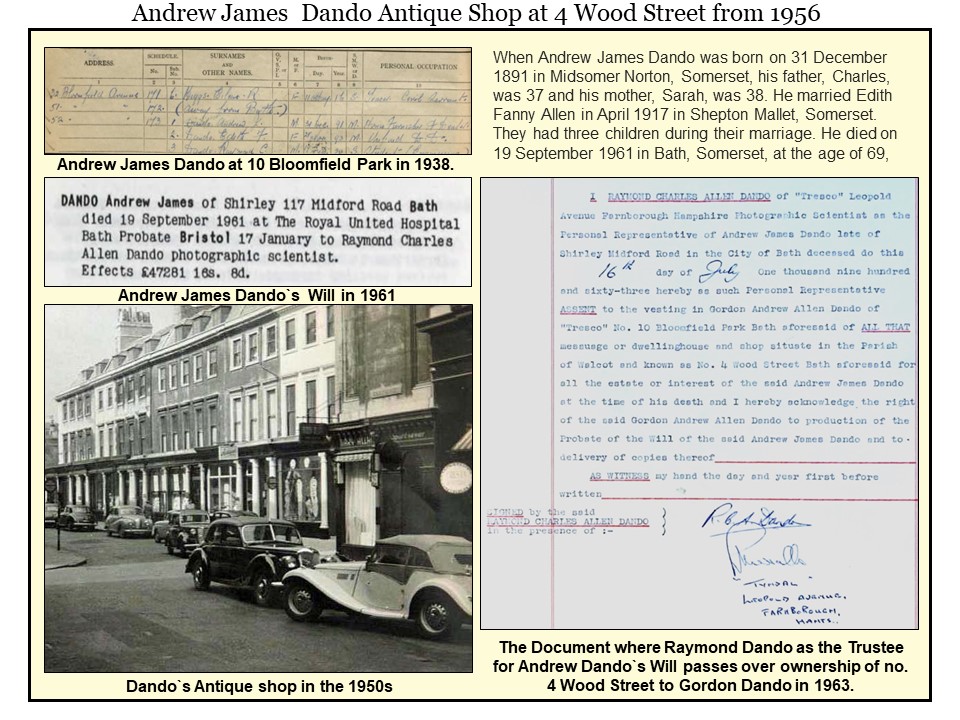
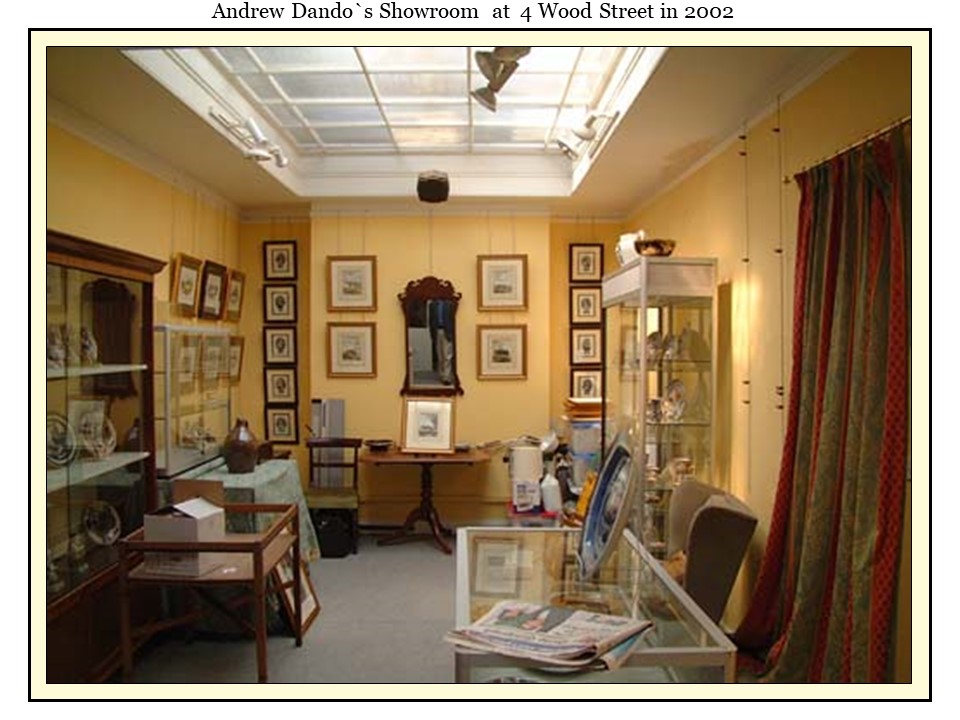
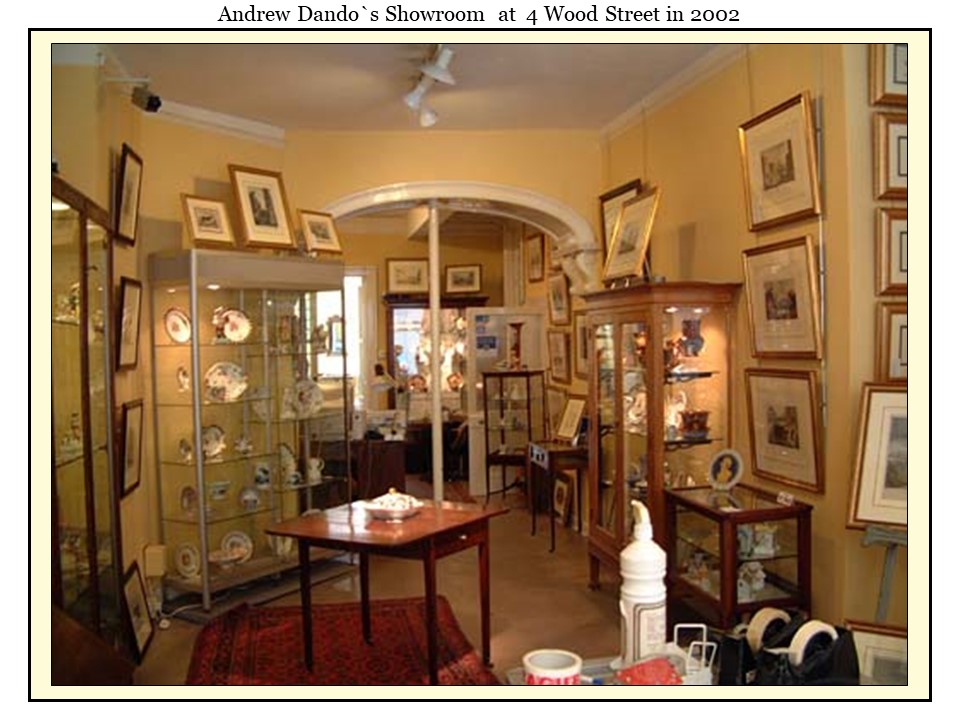
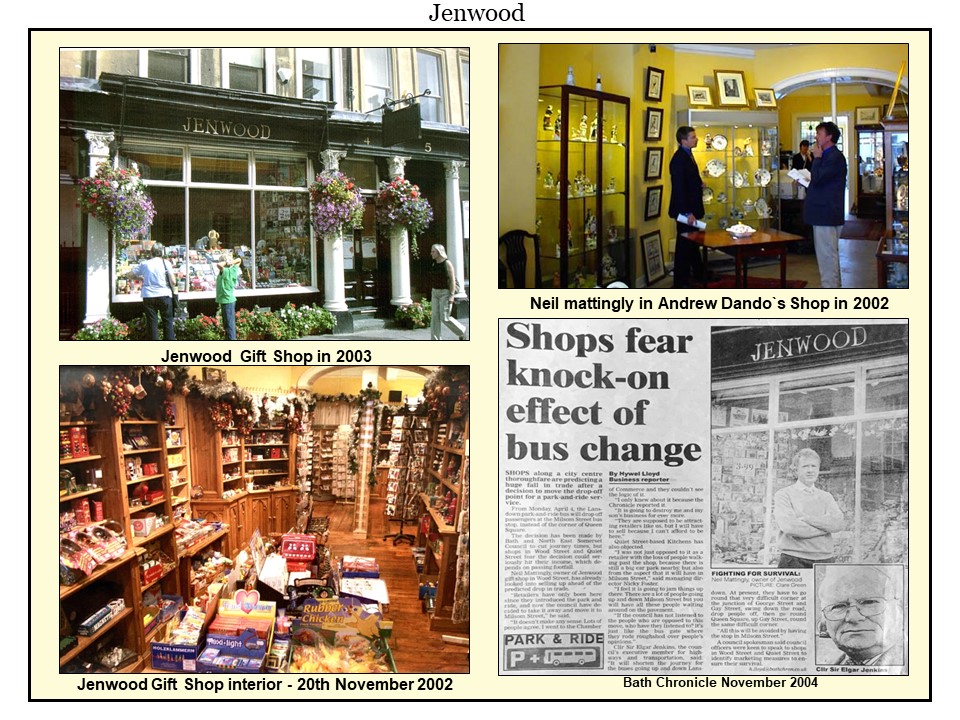
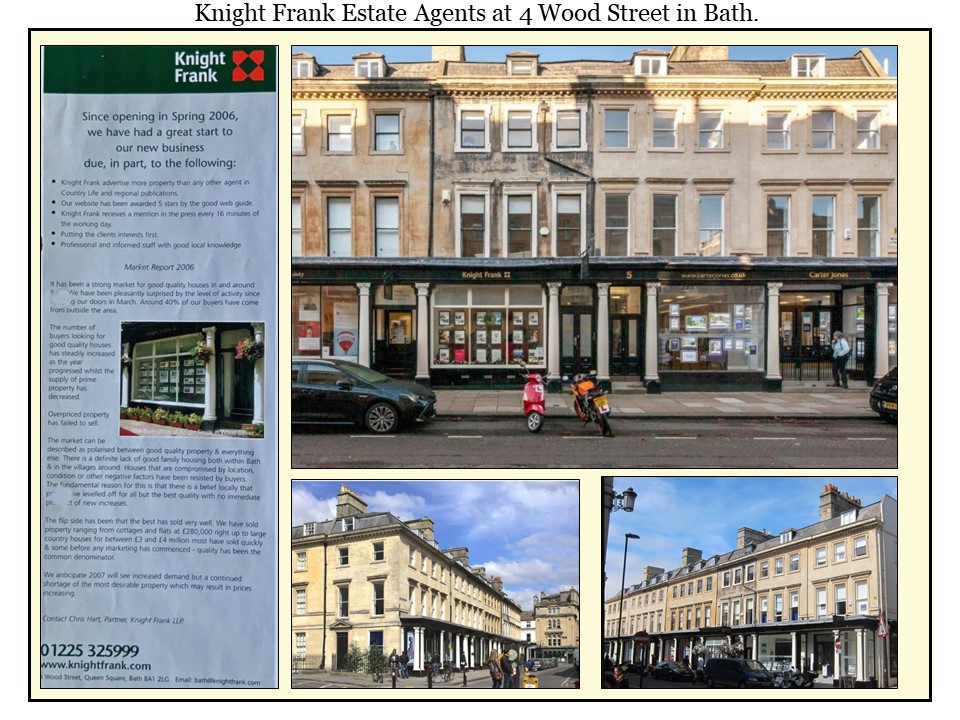
After a number of years as a restaurant the freehold of the building was bought by Andrew James Dando for £5650 in 1956 who returned it to an Antique Shop. He had founded his business in Midsomer Norton near Bath in 1915. After serving in France during W.W.I he moved to Bath and was in partnership with his brother Arthur (another brother, George also had an antique shop in Bath) at Princes Buildings on George Street, later opening his own shop at 13 Old Bond Street. In 1956 the business moved around the corner to 4 Wood Street where it was continued by his son Gordon who became one of the leading provincial ceramics dealers as well as having an extensive stock of period furniture. In 1977 Gordon’s son Andrew joined his father, later starting his own business there with his wife Janice when Gordon retired in 1993. In 2002 they decided to transfer their business to Bradford on Avon where they lived, and the building was put up for sale by Gordon. It was subsequently bought by Neil Mattingly who had previously had gift shops in Canterbury. He then opened a similar traditional Gift Shop in the premises and his sons lived above it. The business was short lived as it was dependent on the passing trade from the drop off point of the Park and Ride in Queens Square and when it moved to Milsom Street in 2004 this disappeared. He later leased the ground floor to the up market Estate Agents, Knight Frank who continue to this day to operate from the premises. The floors above were renamed Tylney House after the first occupant. Neil Mattingly
 .
.